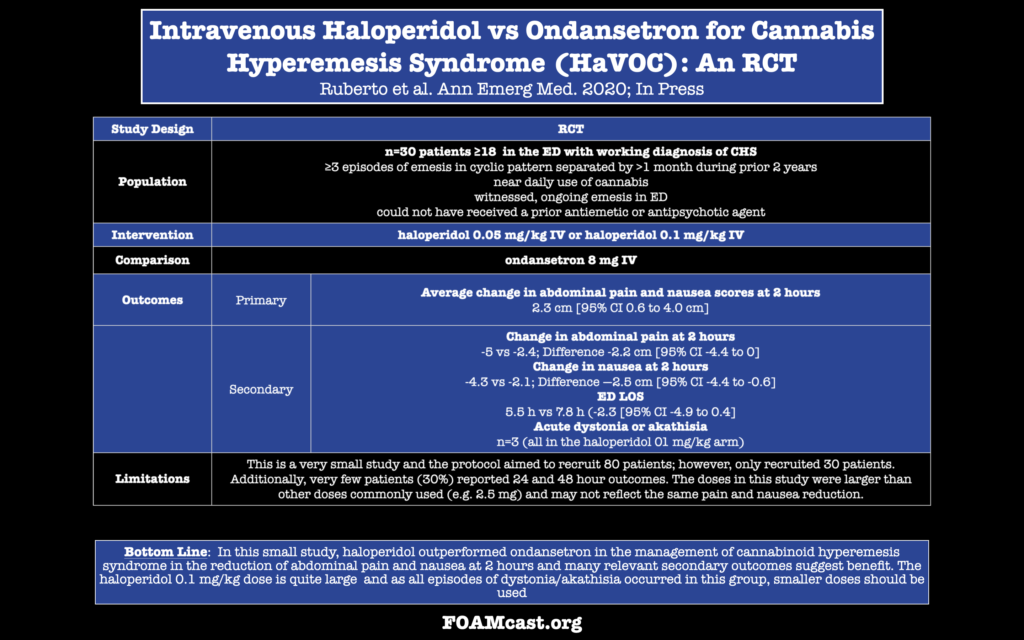
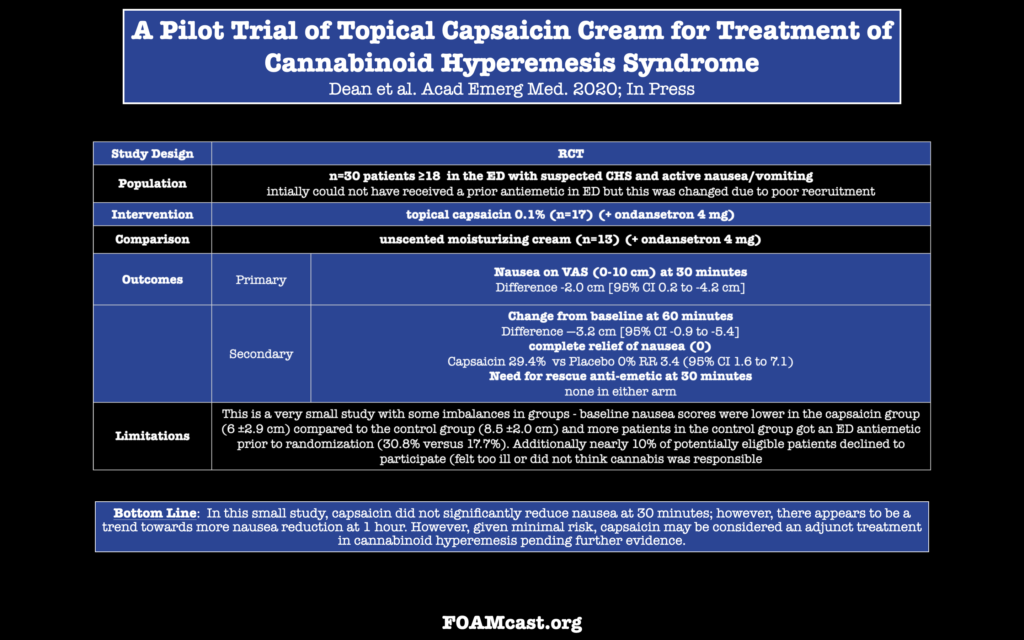
In this episode we review Cannabinoid Hyperemesis Syndrome (CHS / Cannabis Hyperemesis Syndrome) which is characterized by
daily cannabis use on a chronic basis
typically use high doses
and symptoms generally resolve within days of cessation of cannabis use
The nausea and vomiting may be temporarily relieved by hot showers but can be refractory to traditional antiemetics, such as ondansetron and the butyrophenones (haloperidol/droperidol) have been anecdotally used with success, as has capsaicin. We review new articles on the treatment of CHS
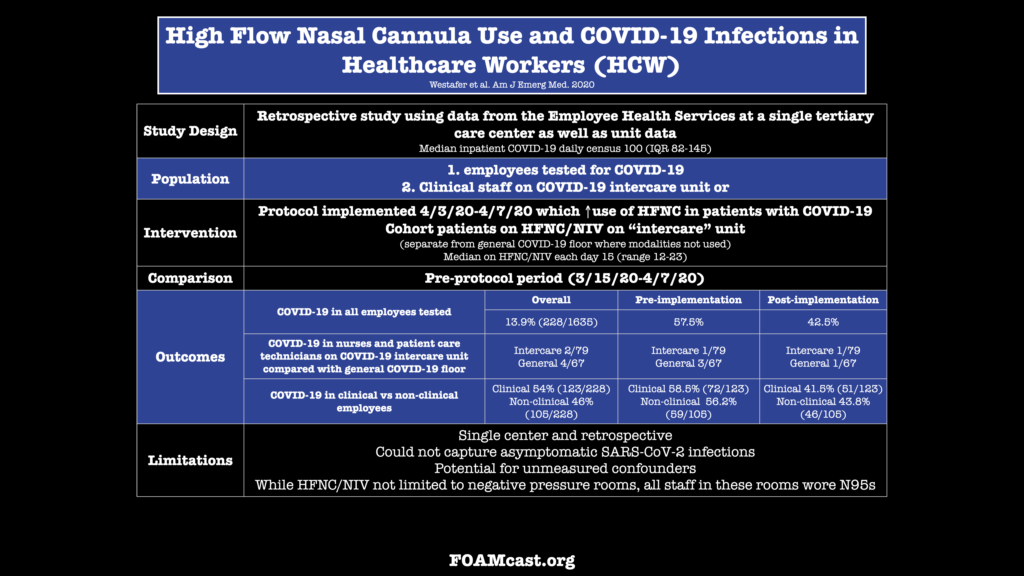
High flow oxygen modalities have been restricted in some institutions due to concern for transmission to health care workers. Endotracheal intubation is one of the most aerosol generating procedures, but the exact risk associated with high flow nasal cannula (HFNC) and non-invasive ventilation is unknown. A 2012 meta-analysis reports on a single study that reported on high flow oxygen, but didn’t provide a definition for this.
We review a study (Westafer et al) that describes trends in health care worker infections at an institution before and after implementation of a protocol that increased use of high flow nasal cannula during the COVID-19 pandemic.
We are bringing you near-daily updates on COVID-19. There is a firehose of information and most of us are too busy to read and digest it all. Note: If you are listening to these more than a few days in the future, please beware that information may have changed and check subsequent episodes. This episode was recorded June 19, 2020
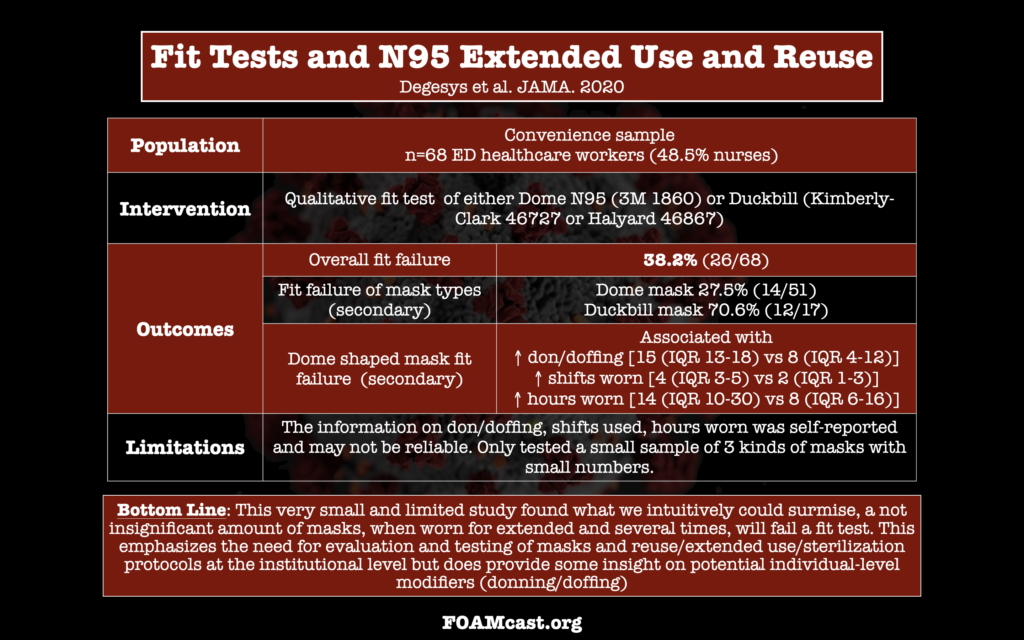
Throughout the COVID-19 pandemic in the United States, personal protective equipment (PPE) shortages have plagued health care workers and institutions, leading the extended use and reuse of N95 respirators and the use of KN95s from China. These studies provide some insight into the effectiveness and potential problems associated with some of these protocols
We are bringing you near-daily updates on COVID-19. There is a firehose of information and most of us are too busy to read and digest it all. Note: If you are listening to these more than a few days in the future, please beware that information may have changed and check subsequent episodes. This episode was recorded June 11, 2020
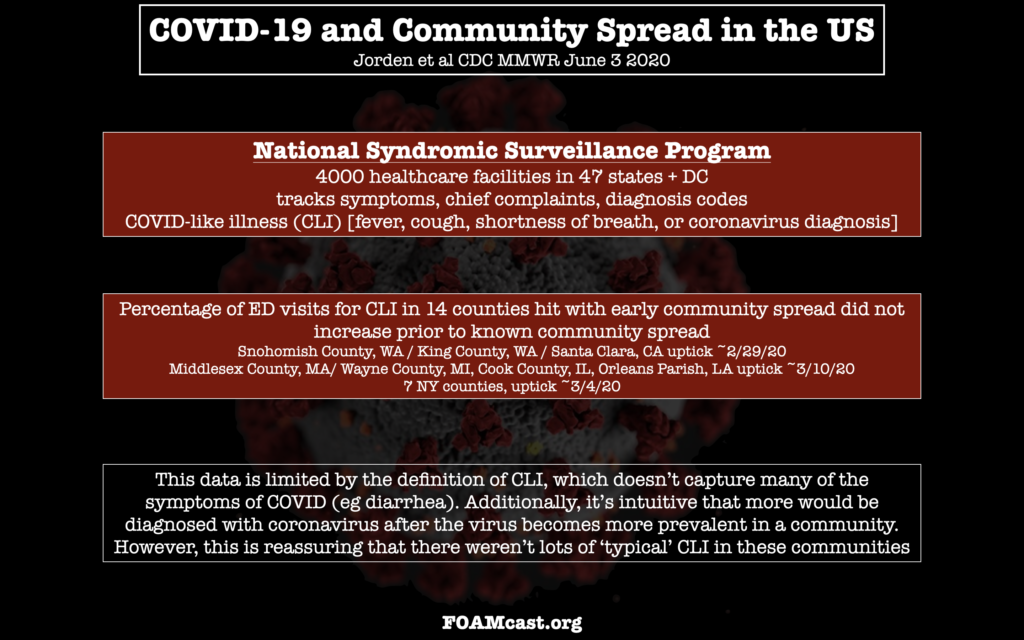
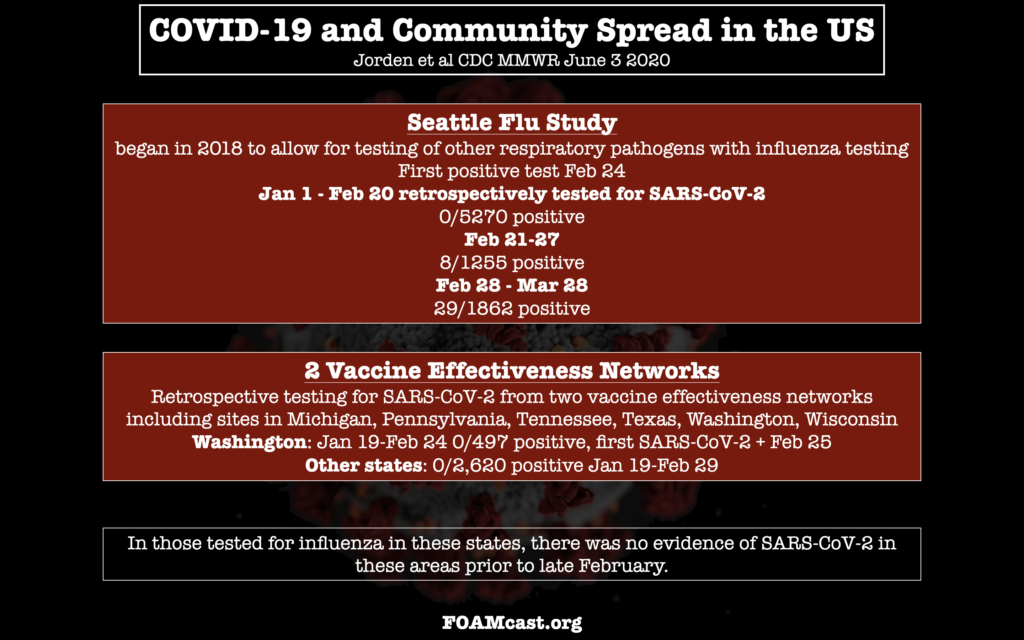
Many have wondered whether SARS-CoV-2 was coursing through our communities prior to the outset of the pandemic – perhaps lurking, undetected in flu season? Post-mortem testing revealed 2 deaths in WA and CA from 2/6 and 2/17 that tested positive, adding to this worry. Jorden et al in CDC MMWR triangulate data from several sources to investigate this.
We are bringing you near-daily updates on COVID-19. There is a firehose of information and most of us are too busy to read and digest it all. Note: If you are listening to these more than a few days in the future, please beware that information may have changed and check subsequent episodes. This episode was recorded June 9, 2020
We are bringing you near-daily updates on COVID-19. There is a firehose of information and most of us are too busy to read and digest it all. Note: If you are listening to these more than a few days in the future, please beware that information may have changed and check subsequent episodes. This episode was recorded June 4, 2020
We are bringing you updates on COVID-19. Note: If you are listening to these more than a few days in the future, please beware that information may have changed and check subsequent episodes. This episode was recorded May 30, 2020
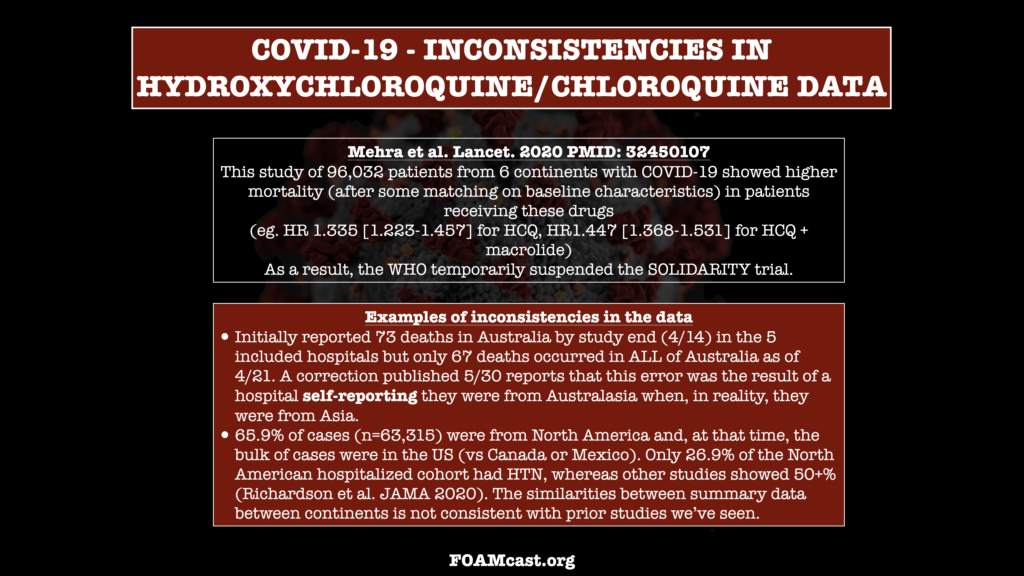
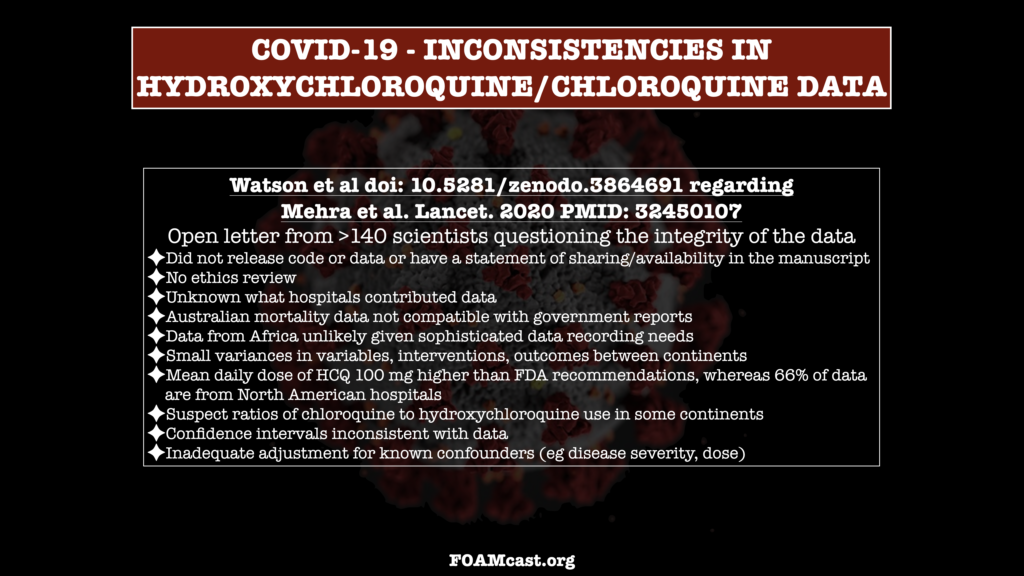
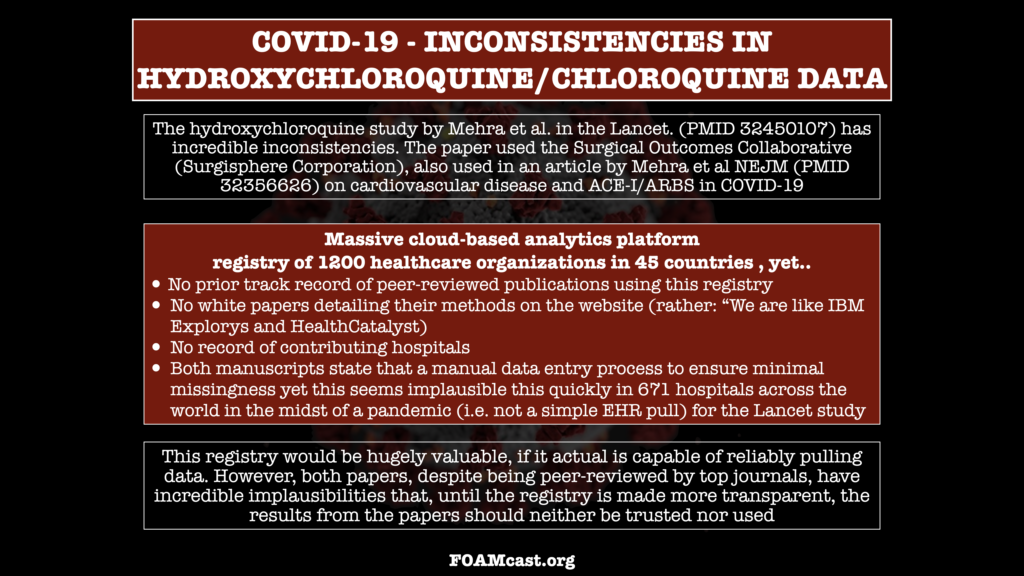
On May 22, the Lancet published a study by Mehra et al that reported an analysis of an enormous international registry of 96,032 patients with COVID-19 that reported patients who received hydroxychloroquine, chloroquine, or these drugs combined with a macrolide had higher risk of mortality. This led to the WHO halting trials. At the same time, remdesivir’s popularity rose and the future for HCQ became bleak. However, some of the numbers just didn’t add up…and, it turns out, it is possible that the data was fabricated or some other serious wrongdoing occurred. More than 100 scientists from around the world have authored an open letter (Watson et al) regarding this concern.
There is one other published paper using the Surgical Outcomes Collaboration, unfortunately, this was the large NEJM study on ACE-I/ARBs in COVID-19, which suffers from similarly improbable data …see this thread
*UPDATE 6/4/20* The authors have issued notices of retraction for both the hydroxychloroquine article as well as the ACE-I/ARB study , citing that they did not have access to the raw data. This is interesting because the NEJM letter is also signed by the author who is the CEO of Surgisphere, who curates the database used in the study, and the corresponding author reported in the original manuscript having full access to the data.
We are bringing you updates on COVID-19. Note: If you are listening to these more than a few days in the future, please beware that information may have changed and check subsequent episodes. This episode was recorded May 30, 2020
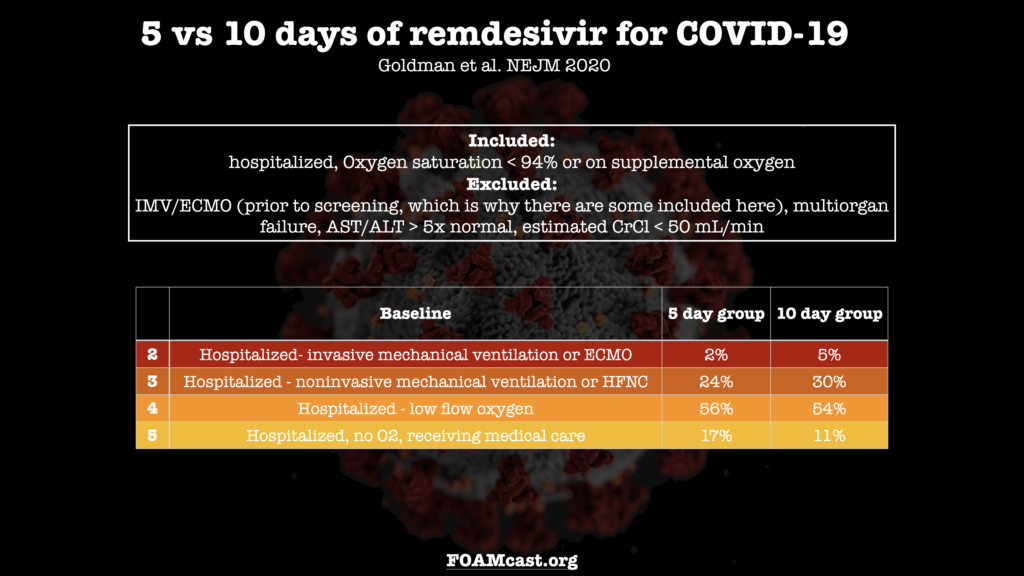
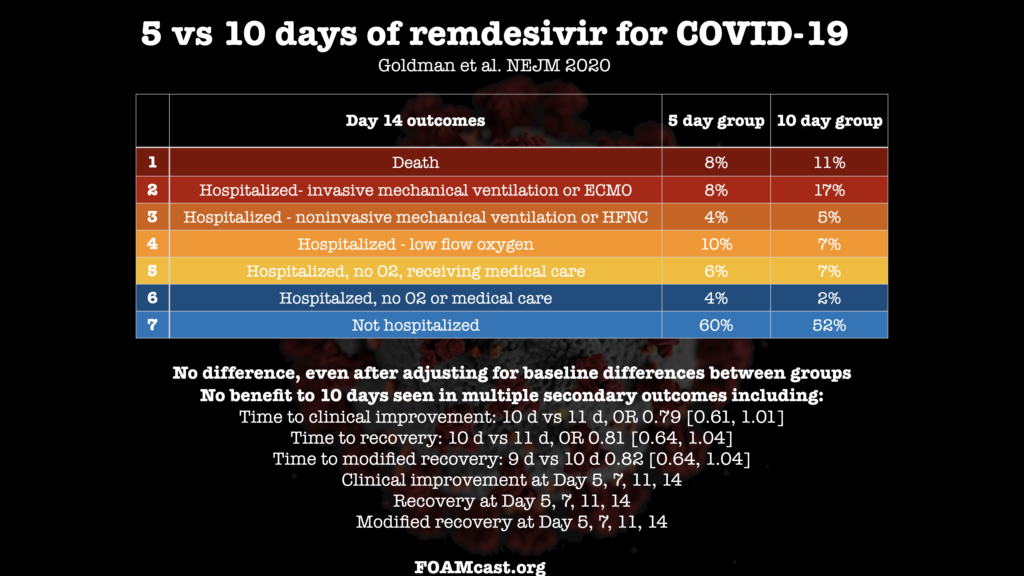
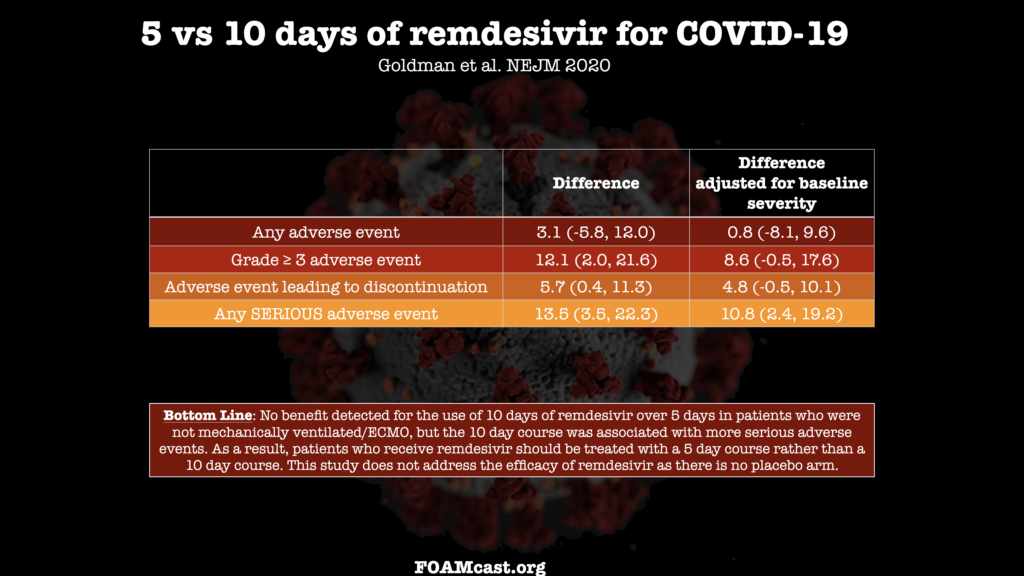
In the wake of the ACTT-1 trial on remdesivir (see post), enthusiasm has quickly grown. In this podcast we review Goldman et al, a Gilead funded study, looking at duration of treatment (not efficacy of remdesivir itself).
We are bringing you updates on COVID-19. Note: If you are listening to these more than a few days in the future, please beware that information may have changed and check subsequent episodes. This episode was recorded May 29, 2020