We are bringing you near-daily updates on COVID-19. There is a firehose of information and most of us are too busy to read and digest it all. Note: If you are listening to these more than a few days in the future, please beware that information may have changed and check subsequent episodes.
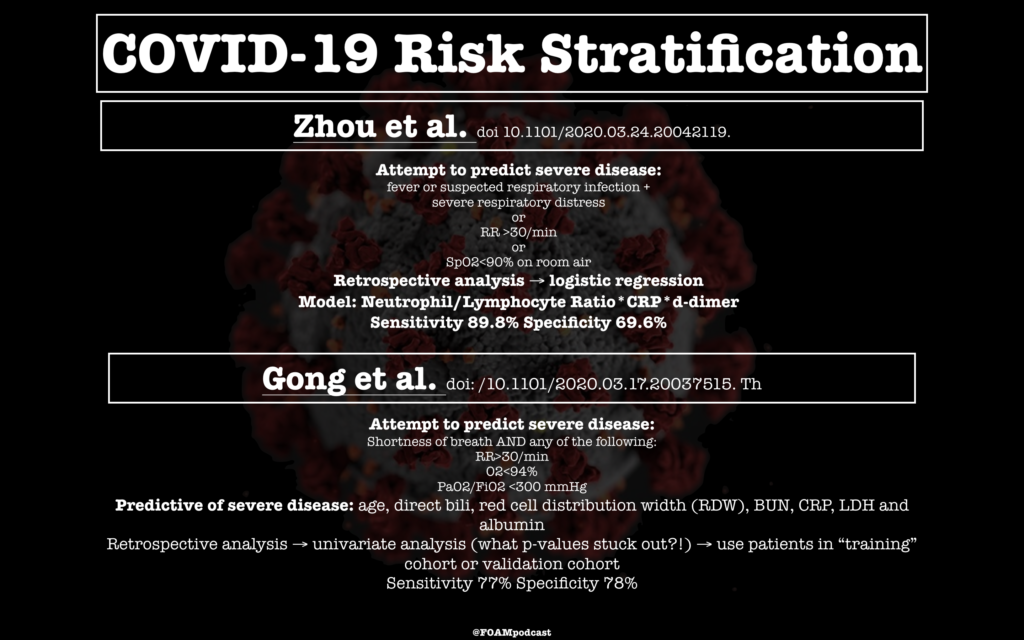
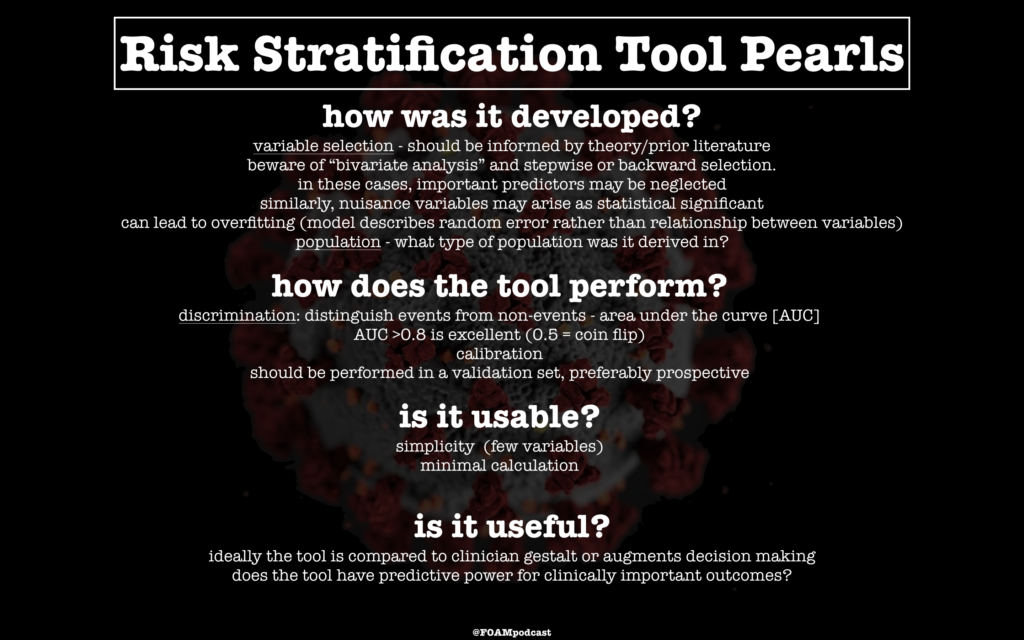
Today we have Dr. Rory Spiegel (@EMNerd_) who blogs at EMcrit joining us to discuss risk stratification
We are bringing you near-daily updates on COVID-19. There is a firehose of information and most of us are too busy to read and digest it all. Note: If you are listening to these more than a few days in the future, please beware that information may have changed and check subsequent episodes.
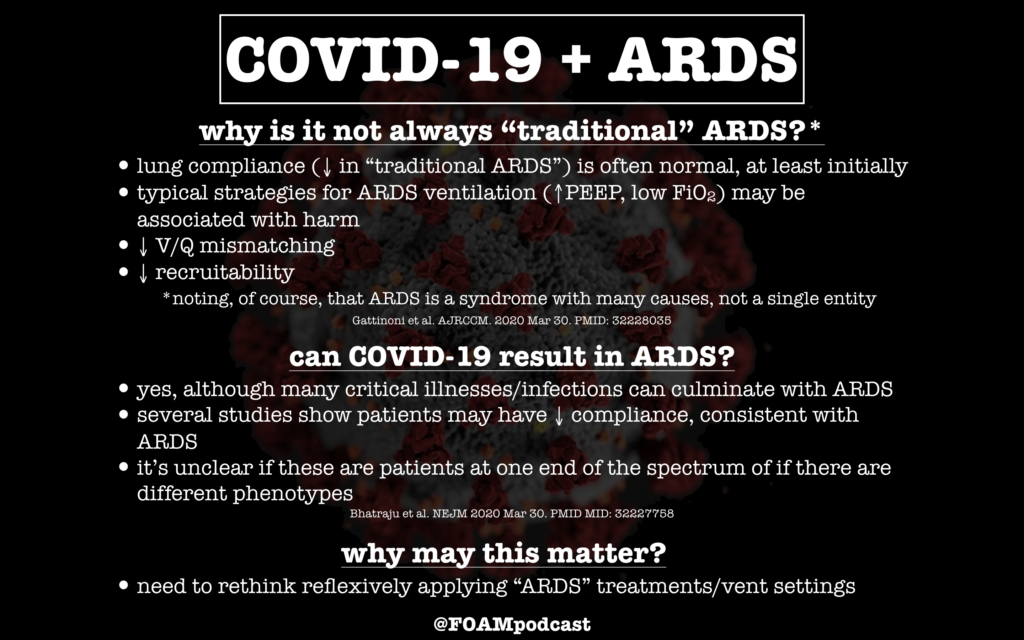
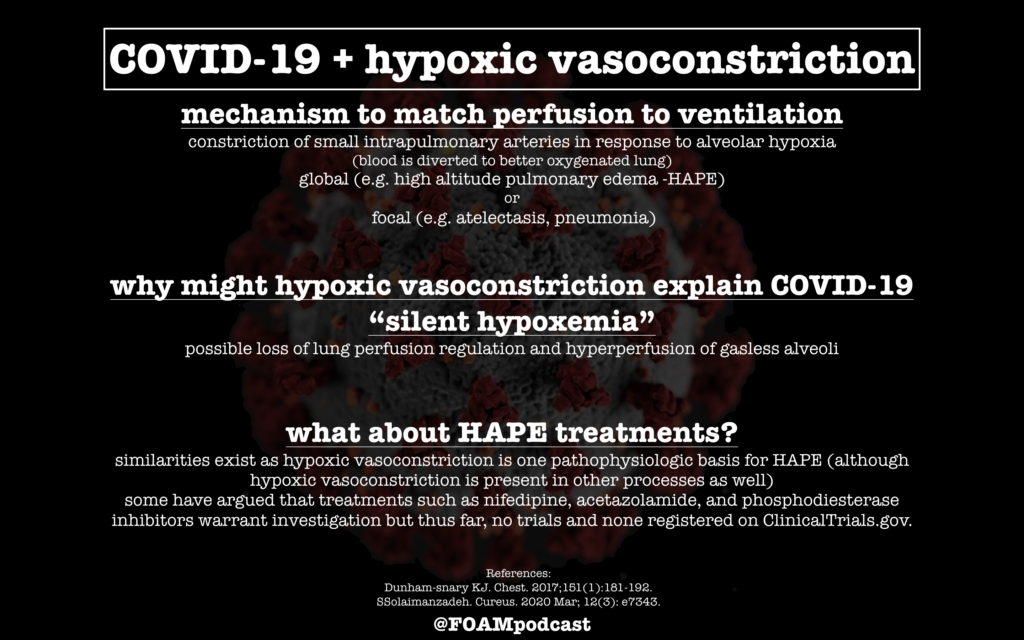
We are bringing you near-daily updates on COVID-19. There is a firehose of information and most of us are too busy to read and digest it all. Note: If you are listening to these more than a few days in the future, please beware that information may have changed and check subsequent episodes. Today we are joined by Dr. Rory Spiegel of EMNerd to discuss various theories and possible mechanisms for the clinical picture we see with severe COVID-19.
Gattinoni L, Coppola S, Cressoni M, Busana M, Chiumello D. Covid-19 Does Not Lead to a “Typical” Acute Respiratory Distress Syndrome. Am J Respir Crit Care Med. 2020; In press
Many people have been talking about the “hemoglobin hijacking” of COVID-19 but this is far from a certain theory and really only from a single computer simulation model.
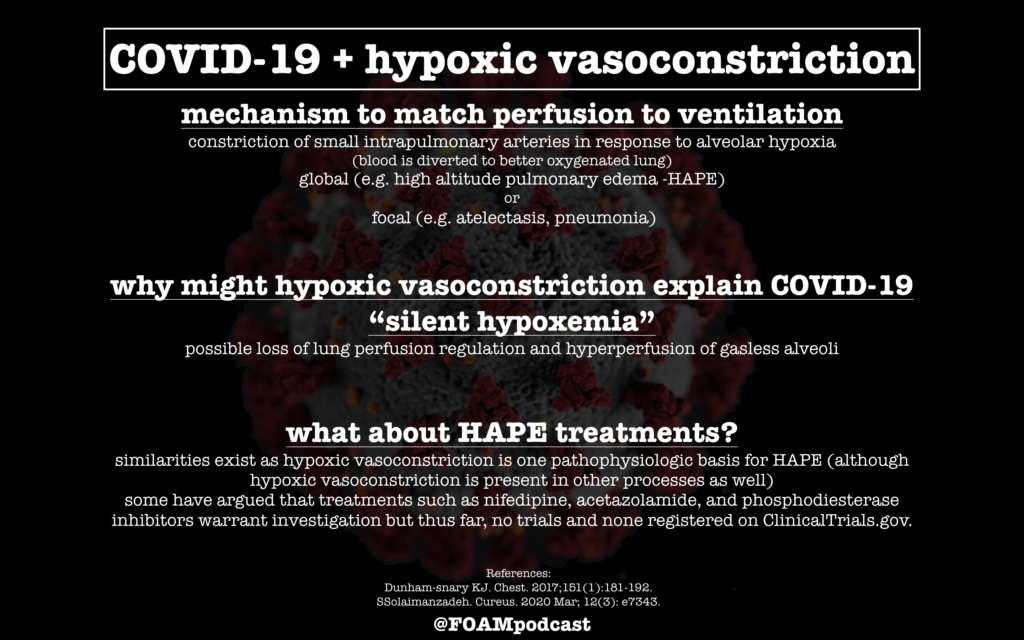
It appears that hypoxic vasoconstriction is the most robust explanation at this time. This has led to some drawing parallels to high altitude pulmonary edema (HAPE).
We are bringing you near-daily updates on COVID-19. There is a firehose of information and most of us are too busy to read and digest it all. Note: If you are listening to these more than a few days in the future, please beware that information may have changed and check subsequent episodes.
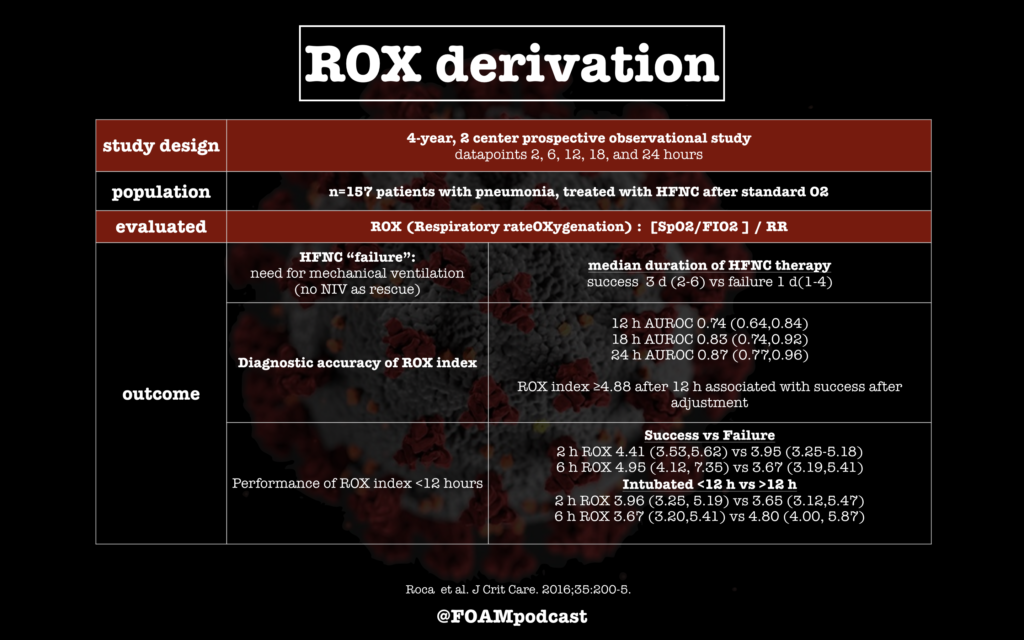
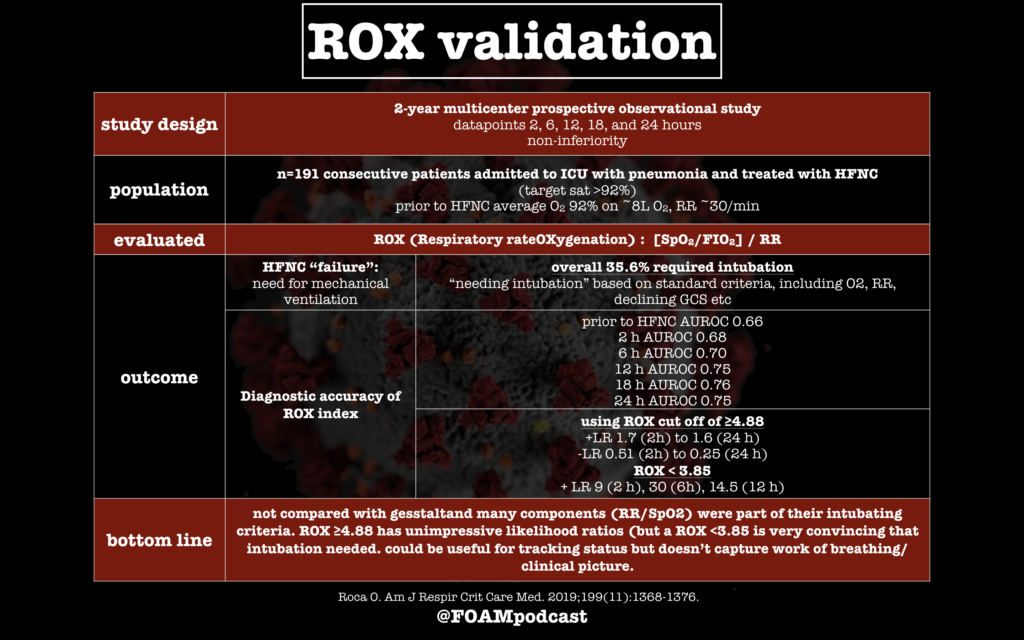
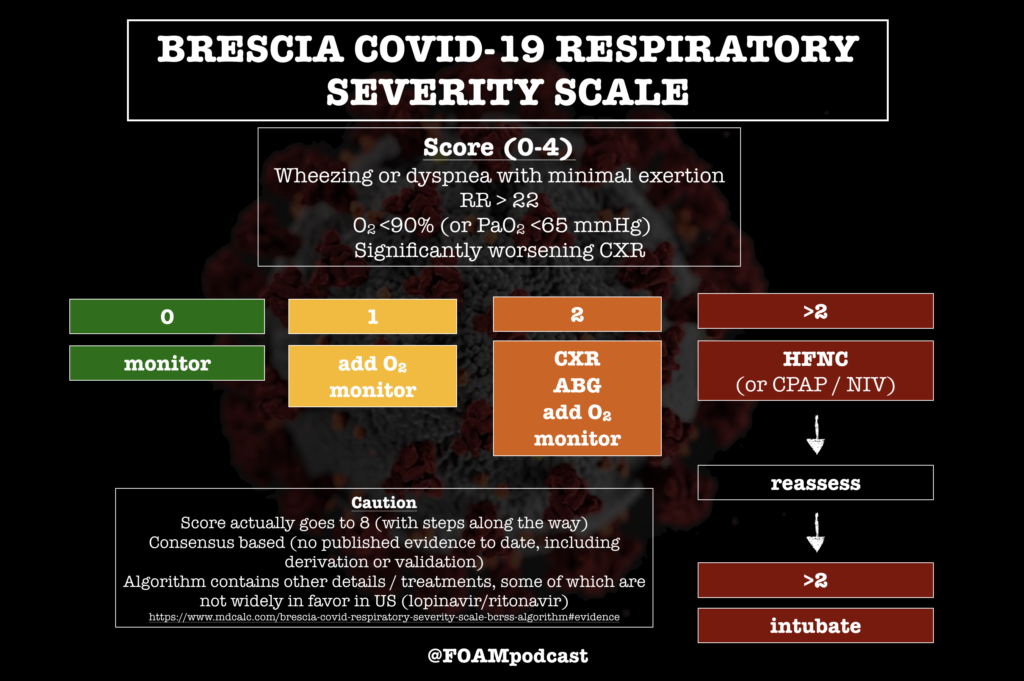
Today we are joined by Dr. Rory Spiegel of EMNerd to discuss the ROX index which has been proposed as a means of predicting who might fail high flow nasal cannula, and has been proposed as a part of some pathways for COVID-19 respiratory management
We are bringing you near-daily updates on COVID-19. There is a firehose of information and most of us are too busy to read and digest it all. Note: If you are listening to these more than a few days in the future, please beware that information may have changed and check subsequent episodes.
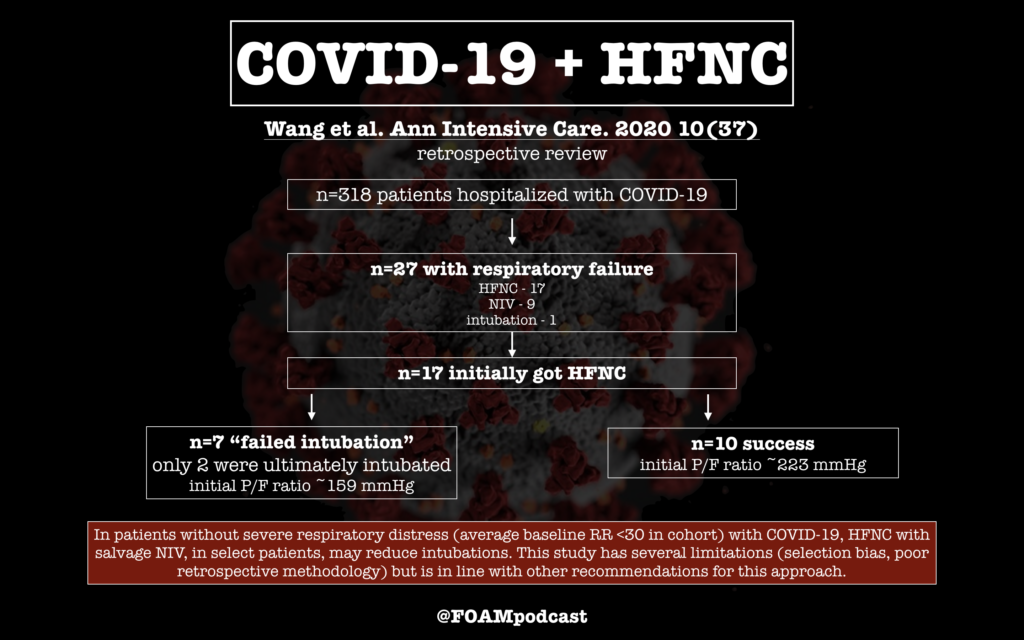
Wang et al. The experience of high-fow nasal cannula in hospitalized patients with 2019 novel coronavirus-infected pneumonia in two hospitals of Chongqing, ChinaAnn Intensive Care. 2020 10(37)
We are going to try to bring you near-daily updates on COVID-19. There is a firehose of information and most of us are too busy to read and digest it all. Note: If you are listening to these more than a few days in the future, please beware that information may have changed and check subsequent episodes.
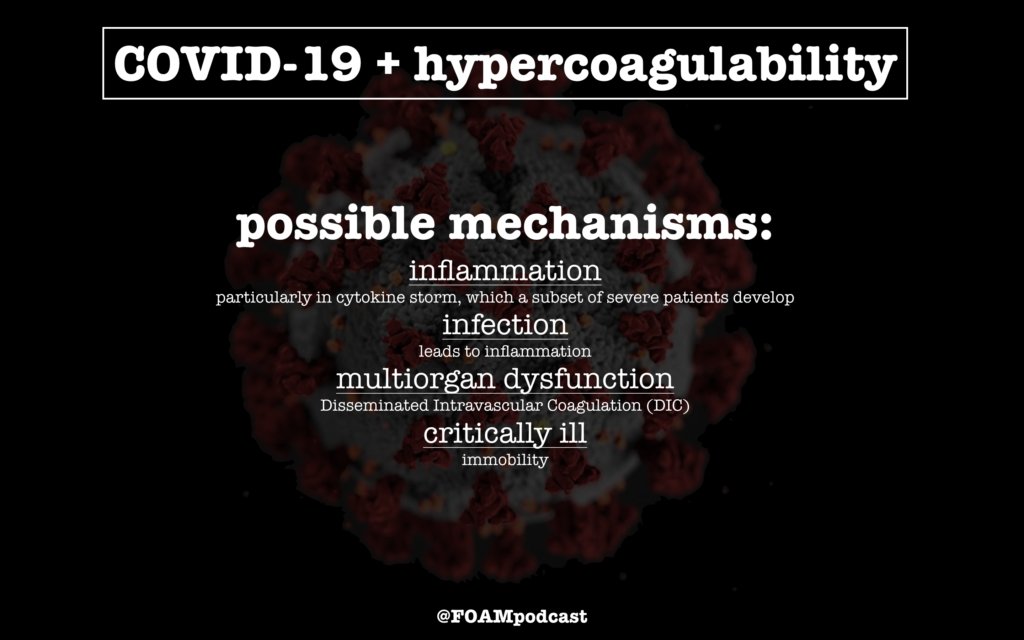
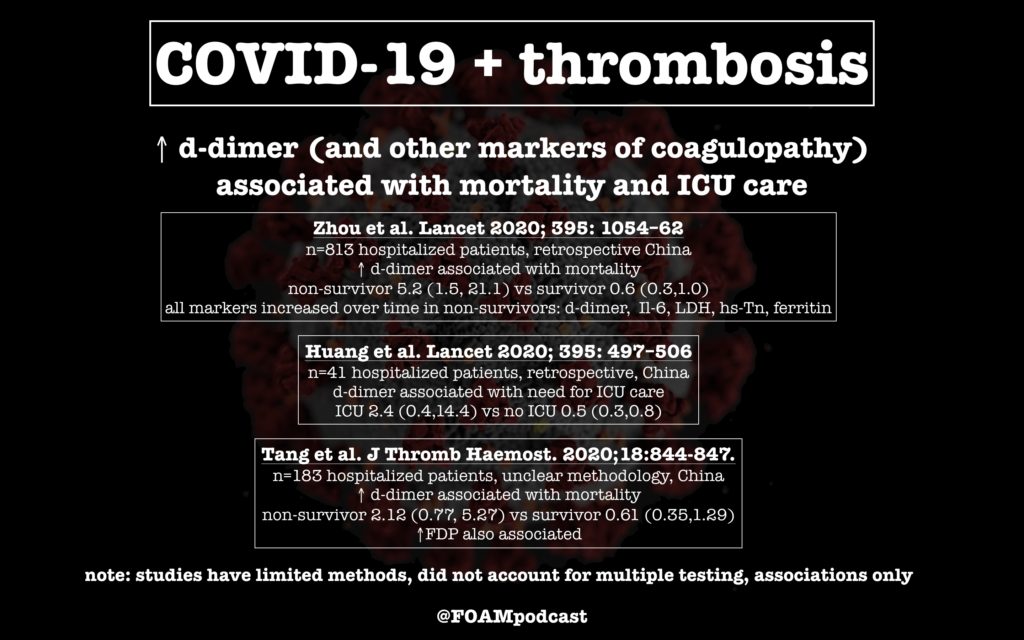
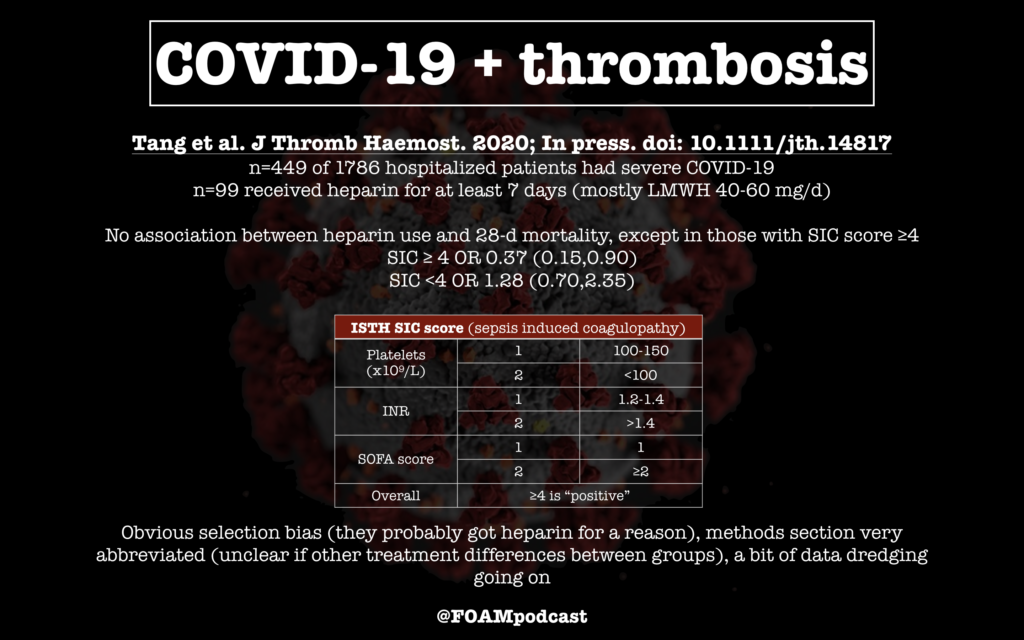
Reports of venous thromboembolism and hypercoagulability are emerging (Xie et al), which may make sense (inflammation/stigmata of critical illness/etc).
We are going to try to bring you near-daily updates on COVID-19. There is a firehose of information and most of us are too busy to read and digest it all. Note: If you are listening to these more than a few days in the future, please beware that information may have changed and check subsequent episodes.
We are going to try to bring you near-daily updates on COVID-19. There is a firehose of information and most of us are too busy to read and digest it all. Note: If you are listening to these more than a few days in the future, please beware that information may have changed and check subsequent episodes.
Also, please check out Brief19.com for the latest research and policy updates regarding COVID-19
We are going to try to bring you near-daily updates on COVID-19. There is a firehose of information and most of us are too busy to read and digest it all. Note: If you are listening to these more than a few days in the future, please beware that information may have changed and check subsequent episodes.
Also, please check out Brief19.com for the latest research and policy updates regarding COVID-19
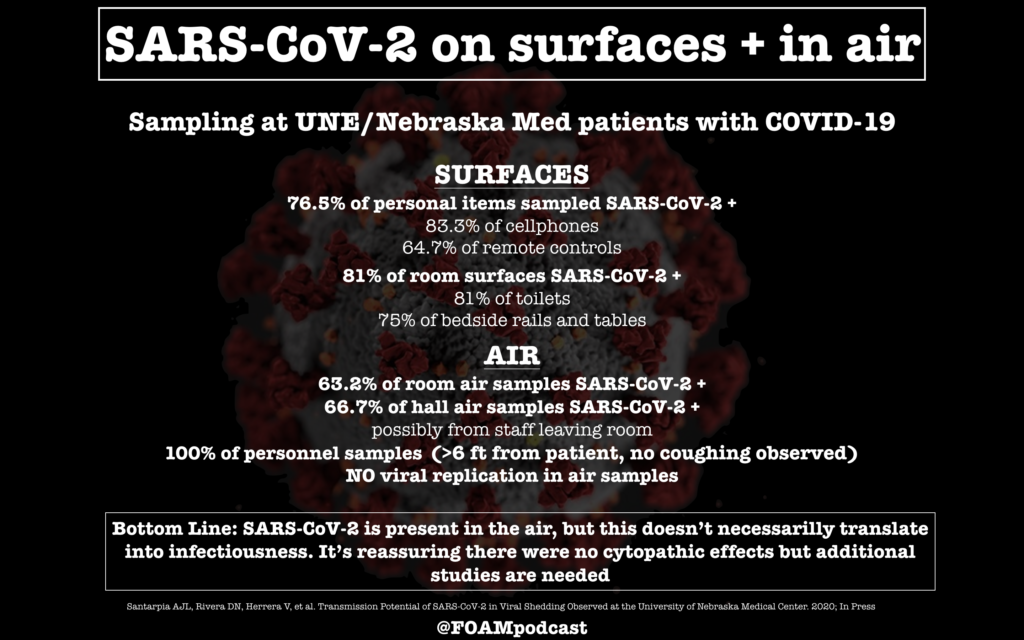
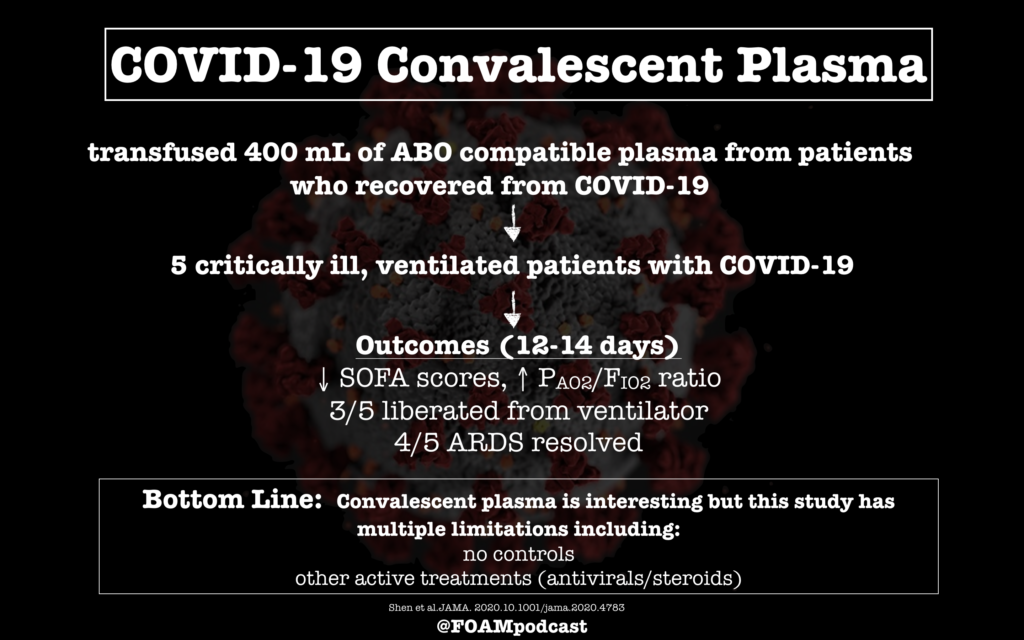
Santarpia et al – Pre-printShen et al. Treatment of 5 Critically Ill Patients With COVID-19 With Convalescent Plasma. JAMA 2020.In press
We are going to try to bring you near-daily updates on COVID-19. There is a firehose of information and most of us are too busy to read and digest it all. Note: If you are listening to these more than a few days in the future, please beware that information may have changed and check subsequent episodes.
Also, please check out Brief19.com for the latest research and policy updates regarding COVID-19