Episode 33 – Hemoptysis

(ITUNES OR Listen Here)

The Free Open Access Medical Education (FOAM)

Dr. Ryan Radecki of Emergency Medicine Literature of Note reviews Gestational Age D-Dimers covering an article by Murphy and colleagues in BJOG.  

The paper: The authors took blood samples from 760 healthy pregnant patients at one point during their pregnancy. They propose a continuous increase for a normal d-dimer cut off throughout gestation.

  • 1-12 weeks:    n=33, 81% with normal d-dimer
  • 19-21 weeks:  n=53, 32% with normal d-dimer
  • 28-36 weeks: n=8, 6% with normal d-dimer
  • 39-40 weeks: 0, 0% normal d-dimer
  • Postpartum day 2: n=12, 8% with normal d-dimer

Dr. Radecki’s “Take Home:

  • Dr. Kline has advocated for the following d-dimer cut offs in pregnancy: 1st trimester 750 ng/mL, 2nd trimester 1000 ng/mL, and 3rd trimester 1250 ng/mL(based on a standard cut-off of 500 ng/mL) and this may be reasonable but is not rooted in robust evidence.

Interestingly, this post was followed by another post covering an article by Hutchinson et al from Am J Roentgenol showing that of 174 CTPAs initially read as positive, 45 were read as negative by chest radiologist upon blinded retrospective review.  That means 25.9% of this cohort diagnosed with PE apparently had negative CT scans.

Core Content – Hemoptysis

Tintinalli (7e) Chapter 66;  Rosen’s Emergency Medicine (8e) Chapter 24

Etiology: Most common causes are bronchitis (often blood tinged sputum), infection (abscess, pneumonia, tuberculosis), neoplasm (lung cancer).  Other causes include iatrogenic causes (bronchoscopy, biopsy, aspirated foreign body), anticoagulation, and autoimmune diseases such as granulomatous polyangiitis (Wegener’s), lupus, and Goodpasture’s.

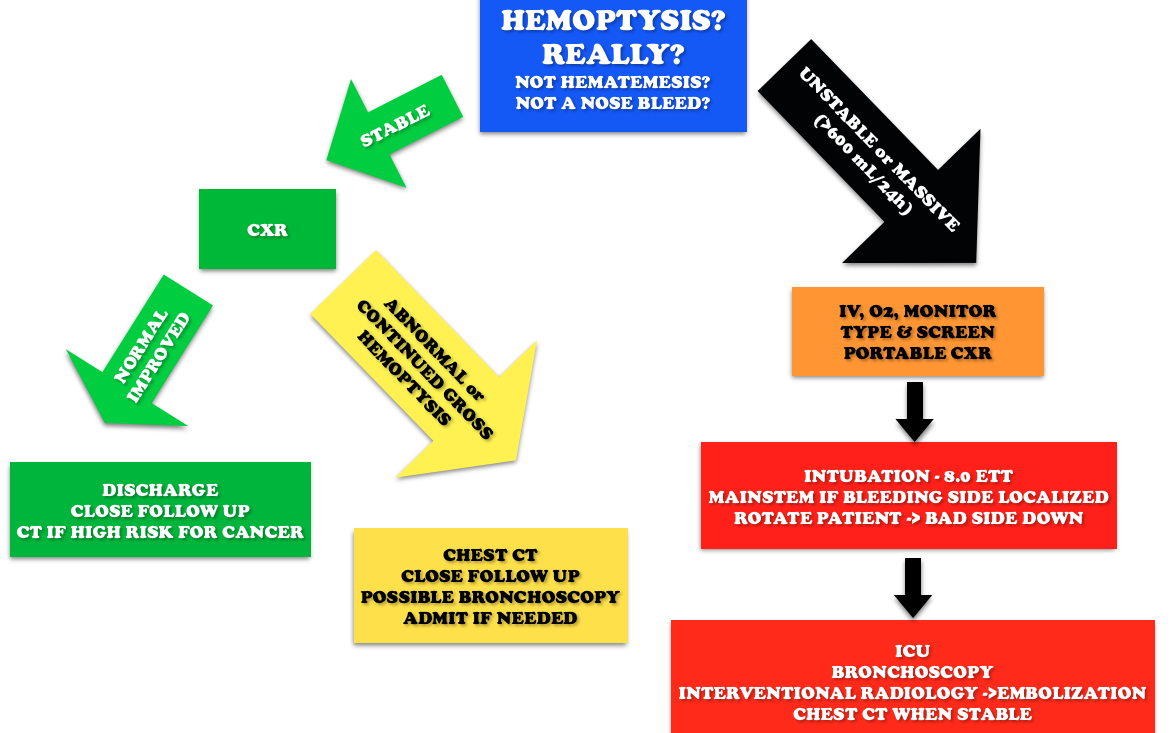
Workup:

Hemoptysis Workup

Generously Donated Rosh Review Questions 

Question 1. A 50-year-old man, nonsmoker, presents to the ED with a 2-day history of cough now associated with frank hemoptysis. He denies any constitutional symptoms. Vital signs are BP 125/70, HR 80, RR 16, and pulse oximetry is 98% on room air. On exam, his lung fields are clear; the remainder of the exam is unremarkable. A chest radiograph is performed, which is normal. [polldaddy poll=9039260]

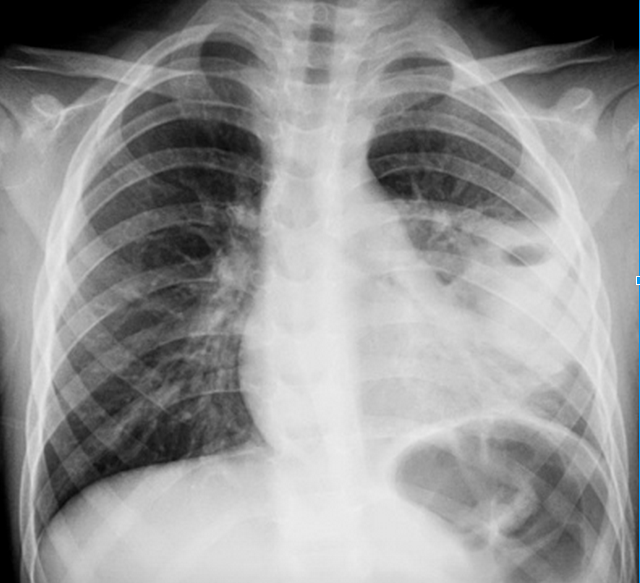
Question 2. A 55-year-old man, smoker, presents to the ED with hemoptysis and dyspnea for 4 weeks. His VS are T 37°C, BP 146/76 mm Hg, HR 85 bpm, RR 20 per minute, and oxygen saturation 96% on RA. His lung exam reveals distant breath sounds on the left side. His chest X-ray is shown below. [polldaddy poll=9039262]

Rosh Review
Rosh Review

Answers

1.C. The patient is hemodynamically stable with a normal chest radiograph, so he does not require ICU admission (A). Patients with massive hemoptysis require ICU admission. The decision to perform a bronchoscopy (B) in this patient will be left up to the pulmonologist. Given the overall clinical picture, urgent bronchoscopy is not required in this case. With massive hemoptysis, an emergent bronchoscopy is indicated. Bronchitis (D) typically presents with the abrupt onset of cough with blood-streaked purulent sputum. The patient in the clinical scenario has persistent frank hemoptysis, which mandates further investigation. In a patient who does not smoke, is under the age of 40, and has a normal chest radiograph and scant hemoptysis, treatment for bronchitis can be initiated with outpatient follow-up.

2. B. Although bronchitis (A) is the most common cause of hemoptysis (responsible for 15%-30% of cases), patients present with cough as the dominant symptom and have abnormal lung exams and normal chest x-rays. The cough may be productive of sputum. The diagnosis of pneumonia (C) requires focal findings on physical exam or infiltrates on radiographic imaging and is typically accompanied by a fever. Patients with lung cancer are at increased risk for pulmonary embolism (D). This patient’s Wells score is 2 (one point each for hemoptysis and malignancy), which makes the likelihood of PE 16% in an ED population. Given the lung mass seen on chest x-ray, lung cancer is more likely than PE.

References:

Episode 32 – Appendicitis

(ITUNES OR Listen Here)

The Free Open Access Medical Education (FOAM)

This week we cover a post from Dr. Rory Spiegel, author of EMnerd, on initial nonoperative management of acute appendicitis based on an article by Salminen et al in JAMA 2015.

  • 530 patients with CT confirmed acute, uncomplicated appendicitis were randomized to operative intervention (n=273 receiving open laparotomies) or non-operative intervention (n=257 receiving antibiotics).
  • 27.3% (n=70, CI 22-33.2%) of patients who received medical management (ertapenem x 3 days then 5 days of levofloxacin) had an appendectomy by the 1 year mark
    • 7 patients (2.7%) in medical management group had complicated appendicitis at one year, 0 had abscesses
    • 45 patients (20.5%) in the operative group had surgical complications

This is a non-inferiority study where the intent  is to demonstrate that an experimental treatment (antibiotics alone) is not substantially worse than a control treatment (immediate surgery). The authors set the non-inferiority margin at 24%, which means that a failure rate (appendectomy by 1 year) >24% would render medical management inferior.

Authors Conclusion: “Among patients with CT-proven, uncomplicated appendicitis, antibiotic treatment did not meet the prespecified criterion for noninferiority compared with appendectomy.”

Spiegel’s Conclusion: “there is a great deal to be determined before this non-invasive strategy can be considered mainstream practice…in what was once considered an exclusively surgical disease, the majority of patients can effectively be managed conservatively. Despite not meeting their own high standards for non-inferiority, the authors demonstrated that for most patients with acute appendicitis, when treated conservatively with antibiotics we can avoid surgical intervention without complications of delays to definitive care.”

More FOAM on non-operative treatment of appendicitis: The SGEM

Core Content
Tintinalli (7e) Chapters 84, 124;  Rosen’s Emergency Medicine (8e) Chapter 93

Appendicitis

Diagnosis:

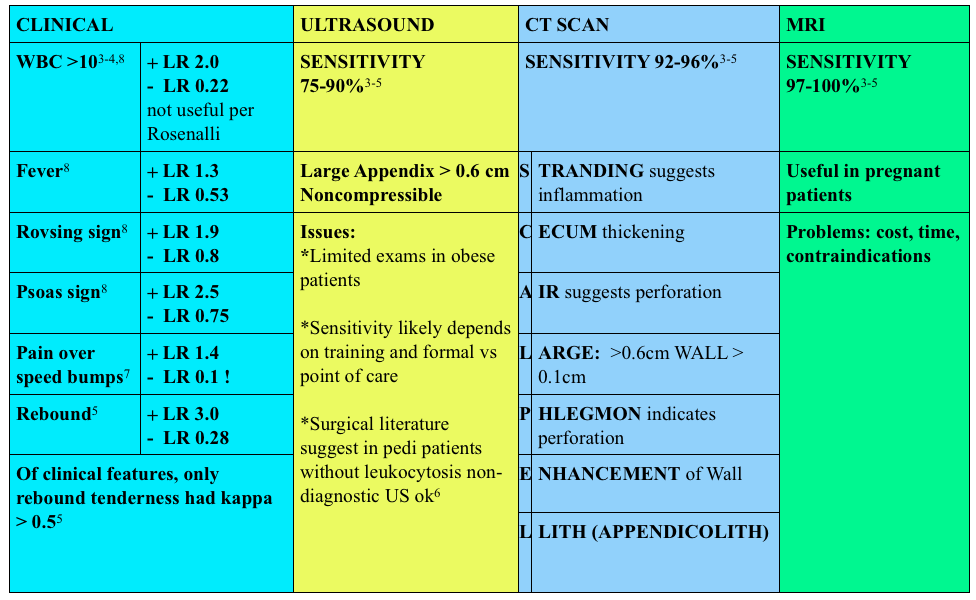
Diagnosing Acute Appendicitis

Use of contrast enhanced CT scans controversial.  Rosenalli and the American College of radiology concur that oral contrast is probably not needed but does increase the emergency department length of stay [3-5].

Treatment:

  • Surgical consult
  • Antibiotics:
    • Broad spectrum beta-lactams: ampicillin-sulbactam 3g IV (75 mg/kg IV in peds)  piperacillin-tazobactam 4.5g IV, cefoxitin 2g IV (40 mg/kg IV in peds)  OR metronidazole 500 mg IV + ciprofloxacin 400 mg IV

Other things to consider in special populations in right lower quadrant:

Pelvic Inflammatory Disease and Tubo-Ovarian Abscess in women

  • Symptoms: vaginal discharge, adnexal or uterine tenderness, lower abdominal pain, cervical motion tenderness, fever
  • Cause: chlamydia and neisseria gonorrhoea most commonly
  • Treatment: ceftriaxone 250 mg IM + doxycycline 100 mg BID x 14 days

Typhlitis (neutropenic enterocolitis) –

  • Symptoms: crampy abdominal pain (often RLQ), abdominal distension, fever, diarrhea, bloody diarrhea
  • Diagnosis: CT scan
  • Treatment: NPO, IV fluids, broad spectrum antibiotics (piperacillin-tazobactam, meropenem, metronidazole) + surgical consult if needed
  • Complications: perforation, gastrointestinal bleeding, sepsis

Generously Donated Rosh Review Questions 

1. A 22-year-old man presents with abdominal pain followed by vomiting for 1 day. His examination is significant for right lower quadrant tenderness to palpation. He has a negative Rovsing sign. [polldaddy poll=9026936]

2. A 22-year-old woman presents with lower abdominal pain and vaginal discharge. She is sexually active with men with inconsistent barrier protection. Her vitals are normal other than temperature of 101°F. On examination, there is yellow cervical discharge, no cervical motion tenderness, but uterine and left adnexal tenderness. An ultrasound does not show any evidence of tubo-ovarian abscess. [polldaddy poll=9026939]

Answers.

1. B. Sensitivity or the true positive rate measures the proportion of actual positives that are correctly identified as such. It is determined by dividing the number of true positives of the test by the number of true positives + false negatives. Tests with a high sensitivity are good for ruling out disease as the test has very few false negatives. A test with high sensitivity is advantageous as a screening tool as it misses very few people with the disease. The onset of pain before vomiting has been found to be as high as 100% sensitive in diagnosing acute appendicitis.Rovsing’s sign (D) (indirect tenderness) describes pain felt in the right lower quadrant upon palpation of the left lower quadrant. This sign signifies the presence of peritoneal irritation and has a sensitivity of 58%. Right lower quadrant pain (C) has a sensitivity of 81% and fever (A) has a sensitivity of 67%.

2.This patient presents with signs and symptoms consistent with pelvic inflammatory disease (PID) and should be treated with ceftriaxone 250 mg IM and 2 weeks of doxycycline. PID is an ascending infection beginning in the cervix and vagina and ascending to the upper genital tract. Neisseria gonorrhoeae and Chlamydia trachomatis are most commonly implicated. It can present with a myriad of symptoms although lower abdominal pain is the most common. Other symptoms include fever, cervical or vaginal discharge and dyspareunia. Pelvic examination reveals cervical motion tenderness (CMT), adnexal tenderness and vaginal or cervical discharge. Inadequately treated PID can lead to tubo-ovarian abscess, chronic dyspareunia and infertility. Due to the variable presentation and serious sequelae, the CDC recommends empiric treatment of all sexually active women who present with pelvic or abdominal pain and have any one of the following: 1) CMT, 2) adnexal tenderness or 3) uterine tenderness. Treatment should cover the most common organisms and typically consists of a third generation cephalosporin (ceftriaxone) and a prolonged course of doxycycline. Patients with systemic manifestations or difficulty tolerating PO should be admitted for management.Ceftriaxone and azithromycin (A) are used in the treatment of cervicitis or urethritis. Clindamycin (C) and metronidazole (D) are used in the treatment of bacterial vaginosis.
References:

1.Salminen P, Paajanen H, Rautio T, et al. Antibiotic Therapy vs Appendectomy for Treatment of Uncomplicated Acute Appendicitis: The APPAC Randomized Clinical Trial. JAMA. 2015;313(23):2340

2. Horst JA, Trehan I, Warner BW et al. Can Children With Uncomplicated Acute Appendicitis Be Treated With Antibiotics Instead of an Appendectomy? Ann Emerg Med. 2015;66:(2)119-22

3.”Acute Appendicitis.” Tintinalli’s Emergency Medicine: A Comprehensive Study Guide.  7th ed. pp 574-581.

4. “Acute Appendicitis” Rosen’s Emergency Medicine. 8th ed. pp. 1225-1232.e2

5. ACR Appropriateness Criteria.  American College of Radiology. 2013.

6. Cohen B, Bowling J, Midulla P, et al. The non-diagnostic ultrasound in appendicitis: is a non-visualized appendix the same as a negative study? J Pediatr Surg. 2015;50:(6)923-7

7. Ashdown HF, D’Souza N, Karim D, Stevens RJ, Huang A, Harnden A. Pain over speed bumps in diagnosis of acute appendicitis: diagnostic accuracy study. BMJ. 2012;345:e8012.

8. Bundy DG, Byerley JS, Liles EA. Does This Child Have Appendicitis? 2009;298(4):438–451.

Episode 31 – Vasopressors

(ITUNES OR Listen Here)

The Free Open Access Medical Education (FOAM)

This week we cover posts from the Wessex ICS site, The Bottom Line, which is an excellent source for breakdown of recent and important trials. This site is great for reviews of high impact trials in critical care. We cover their post on a systematic review of peripheral pressor complications and then we delve into a recent prospective trial by Cardenas-Garcia and colleagues that came up at SMACC.

The Bottom Line on the Loubani paper

  • Systematic review of the literature 1946-Jan 2014 (does not include most recent trial)
  • Outcome – local tissue injury or extravasation: 325 separate events, 318/325 peripheral pressors
    • Signal that distal lines are not ideal for running pressors: 204 events (local tissue injury) were distal to the antecubital fossa/popliteal fossa (90% of events)
    • Signal that duration of pressors running peripherally may impact likelihood of adverse event. Increasing number of events were reported at the 6-12 hour mark (n=9) then 12-24 hour (n=18) and then almost all >24 hour

The Cardenas-Garcia Paper

  • Single arm consecutive study of ICU patients
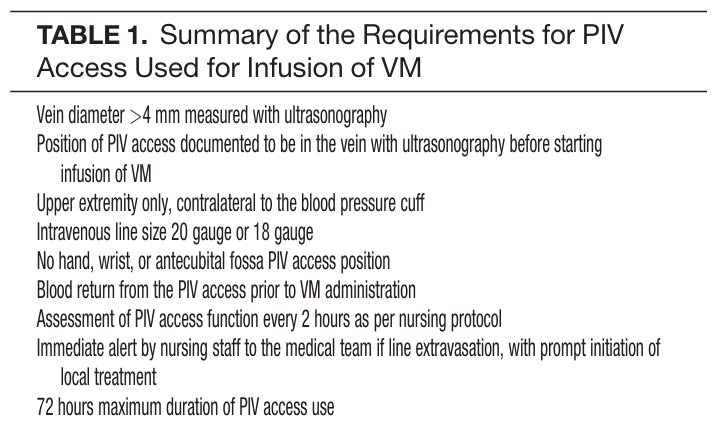
  • ICU fellows and attendings determined if peripheral pressors were warranted and then initiated the following protocol:
    • Vein diameter >4 mm measured with ultrasonography and PIV confirmed with US before pressors started
    • Upper extremity only, contralateral to the blood pressure cuff
    • IV size 20 gauge or 18 gauge
    • No hand, wrist, or antecubital fossa PIV access position
    • Blood return from the PIV access prior to VM administration
    • Assessment of PIV access function q 2h as per nursing protocol
    • Immediate alert by nursing staff to the medical team if line extravasation, with prompt initiation of local treatment
    • 72 hours maximum duration of PIV access use
  • N=734 patients
  • 19/783 peripheral vasopressor administrations with infiltration of site (2%) with no events of local tissue injury

The take home: If a patient needs vasopressors, you can start them through a good, proximal peripheral IV.  Sometimes patient or situation factors delay central lines, this doesn’t mean it needs to delay patient’s therapy.  Know what to do in the event of infiltration (see this EMCrit post).

Core Content
Tintinalli (7e) Chapter 24

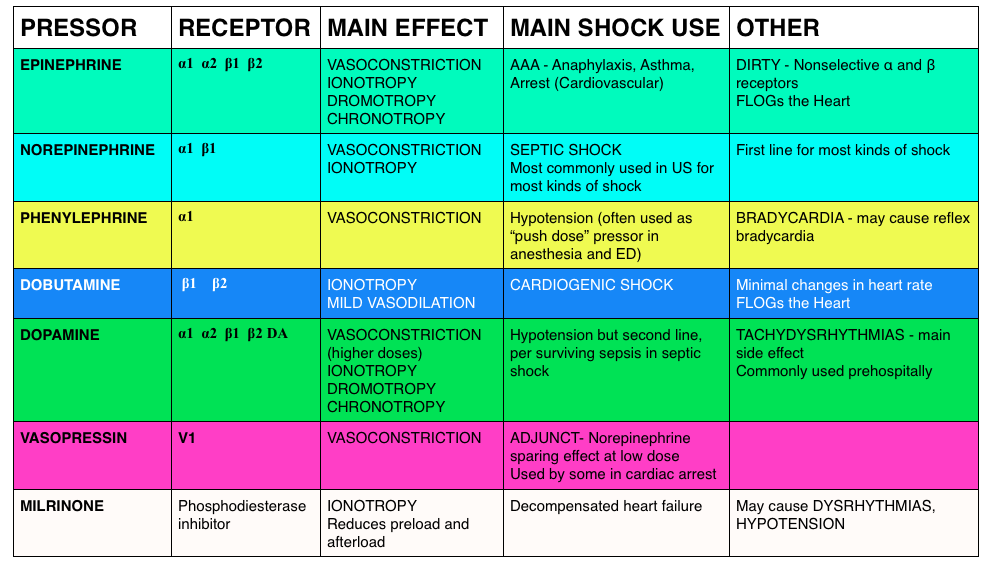
Screen Shot 2015-07-25 at 11.14.51 AM

Panchal et al – Phenylephrine bolus dosing in peri-intubation period

Central line technique from Dr. Reuben Strayer – Wire through catheter vs wire through needle

Generously Donated Rosh Review Questions 

1.[polldaddy poll=8996471]

Answer. C. Norepinephrine is considered the vasopressor of choice for treatment of septic shock.   Norepinephrine acts primarily as an α-adrenergic agonist, causing vasoconstriction that results in an increase in blood pressure. It also has β-adrenergic properties, which causes an increase in cardiac output and heart rate. The combination of α-adrenergic and β-adrenergic properties benefits patients who have septic shock. Norepinephrine also has a short duration of action, which allows for rapid adjustment of dosing in response to changes in a patient’s hemodynamic status. Dopamine (A) was once widely used in the treatment of septic shock, but studies have shown that it has no advantage over norepinephrine and its use is associated with a higher death rate. Epinephrine (B) has both α-adrenergic and β-adrenergic properties and has a greater affinity for alpha- and beta-receptors than norepinephrine. Its use is associated with a higher rate of cardiac dysrhythmias and a decrease in splanchnic blood flow. Phenylephrine (D) is a pure α-adrenergic agent that causes vasoconstriction and impairment of tissue blood flow throughout the body, most notably in the splanchnic circulation.

FOAMcastini – Dr. Jerome Hoffman on ACEP’s tPA Clinical Policy

(iTunes or Listen Here)

In a prior FOAMcastini, we covered the updated ACEP tPA clinical policy. As residents, we sought perspectives from experts, the FOAMcast brain trust (Drs. Anand Swaminathan, Ken Milne, Ryan Radecki, and David Newman).  We (Jeremy) also interviewed Dr. Jerry Hoffman, faculty at UCLA.

In this interview, Dr. Jerry Hoffman, a public skeptic and author of peer reviewed critiques of tPA provides interesting perspective on more than thrombolysis but on the future of guidelines (referencing this paper) and science in Emergency Medicine.

A few of Dr. Hoffman’s articles on the topic:

Ensuring the integrity of clinical practice guidelines: a tool for protecting patients.

How is more negative evidence being used to support claims of benefit: The curious case of the third international stroke trial (IST-3).

Thrombolysis for stroke: policy should be based on science, and not on politics, money or fear of malpractice.

Stroke thrombolysis: we need new data, not more reviews.

Against: And just what is the emperor of stroke wearing?

Thrombolytic therapy for acute ischemic stroke – Tissue plasminogen activator for acute ischemic stroke: Is the CAEP Position Statement too negative?

FOAMcastini – ACEP tPA Clinical Policy

(iTunes or Listen Here)

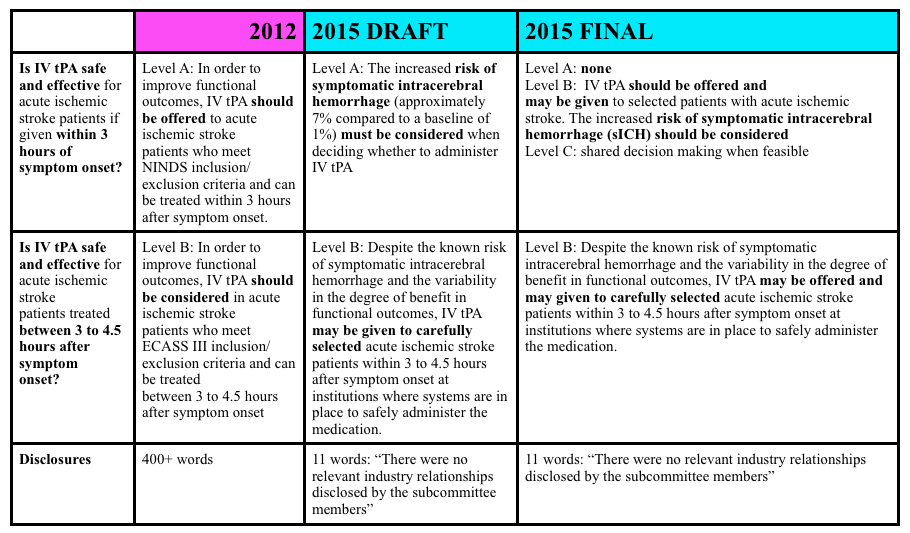
In a prior FOAMcastini, we covered a draft of an ACEP clinical policy on tPA for acute ischemic stroke.  This came in the wake of years of controversy over the aggressive position taken in the 2012 clinical policy.  In June ACEP released the final version of this policy.

Screen Shot 2015-07-15 at 5.42.07 PM

Per the policy within 3 hours:

  • NNT of 8 for excellent functional outcomes; 95% [CI] 4-31
    • Paucity of patients presenting with mild stroke (NIHSS score 0 to 4)
  • NNH of 17 for symptomatic intracerebral hemorrhage; 95% CI 12-34

While FOAMcast is not an interview style podcast, we felt compelled to get some perspective on Emergency Physicians a little more experienced than ourselves.  Here we interview:

Dr. Ryan Radecki (@emlitofnote), Assistant Professor, University of Texas – Houston

  • See his response to the policy on his blog here

Dr. David Newman (#draftnewman), Associate Professor of Emergency Medicine, Mount Sinai Hospital

Dr. Anand Swaminathan (@EMSwami), Assistant Professor of Emergency Medicine, NYU

Dr. Ken Milne (@thesgem), Chief of Staff at South Huron Hospital

FOAMcastini – SMACC Day 3

(ITUNES OR Listen Here)

We are bringing you pearls from conferences we attend including SMACC (#smaccUS).  This conference was amazing and we enjoyed meeting everyone.  We look forward to seeing y’all at SMACC in Dublin June 13-16, 2016 and hope you check out the Free Open Access Medical education (FOAM) lectures from SMACC, in podcast form, until then.

Things in medicine aren’t always engineered to help us succeed. Engineering the environment smarter may make care safer. – Kevin Fong

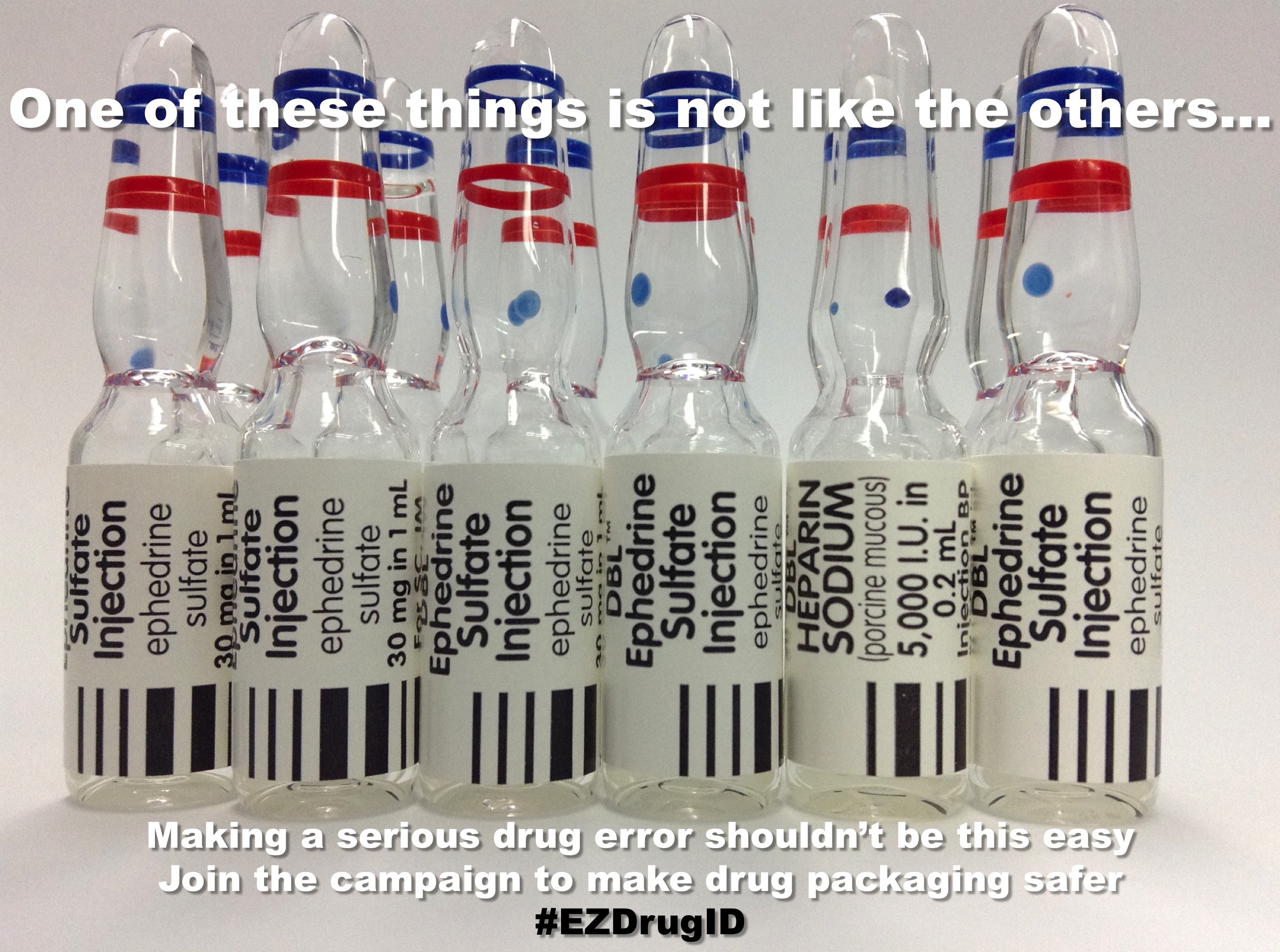
  • Medication vials often look quite similar and in a busy, heated moment this may lead to medication errors.  Check out the EZdrugID project.
EZdrugID
Photo: Dr. Nicholas Chrimes

Analgesia, there’s more to it than medicine – Jeremy Faust

  • Distraction is a good thing.  Doing a painful procedure such as injecting local anesthetic? Distract the patient in tactile fashion by lightly scratching the patient proximal to the procedure. Alternative, music and videos can distract children and adults.
  • Calm music may reduce perception of pain.
  • Take advantage of child life, if you have them [AHRQ]!

The Glasgow Coma Scale is a problem – Mark Wilson (see this blog post)

  • The score doesn’t have intrinsic meaning. A GCS score can be associated with mortality ranging from 20-57%, depending on the individual components [Healey]
  • We’re really bad at assigning correct GCS scores to patients, even when we have cheat sheets [Feldman]
  • The interrater reliability of the GCS is abysmal [Bledsoe, Gill]
  • Describe the patient’s exam!

Shift work is disruptive – Haney Mallemat

  • Microsleep is dangerous, yet fairly common in the over tired provider
  • Replacing traditional night shifts with “casino shifts” may help.  These are often comprised of 2 short shifts from 10p-4a and 4a-10a with the notion that each provider would get sleep during the “anchor period” of the Circadian cycle, 2am-6am.  Small studies have shown this feasible, preferred by many, and perhaps perceived [Croskerry, Dukelow]

FOAMcastini – SMACC Day 2

(ITUNES OR Listen Here)

We are bringing you pearls from conferences we attend including SMACC (#smaccUS).  The plenary, facilitated by the brilliant Dr. Victoria Brazil, focused on the impaired provider. At SMACC we’ve heard time and time again – we are fallible, we make mistakes.

Dying – Dr. Ashley Shreves

  • What often presume what our patients want without asking them.  When dying patients are asked what they want, it comes down to dignity. 1) Being clean 2) Naming a decision maker and then other top priorities essentially come down to healthcare providers listening [Steinhauser et al]
  • We don’t ask patients about their code statuses appropriately. First, we often spend almost no time doing this.  One study of hospitalists found that code status discussions lasted, on average, one minute. Further, that one minute was spent mostly focused on procedures [Anderson et al]
  • Communicate!

Evidence Based Medicine – The consensus of these cage matches was that evidence isn’t all equal; the existence of data doesn’t necessarily mean it’s good data.

  • The Randomized Control Trial (RCT) has problems – Drs. Paul Young and Simon Finfer
    • Beware the Fragility Index – small effects in RCTs
    • Caution with Base Rate Neglect – we jump to inappropriate conclusions.  For example, pretend you have tested positive for a typically fatal disease.  The test is accurate 95% of the time.  Most people would conclude that there was a 95% chance they have the disease – a death sentence. Yet, one would need to know the prevalence of the disease in the general population to determine the actual likelihood that the test was correct.  If the prevalence of the disease is 1 in 1000, the likelihood that you actually have the disease based on this test is <2%.
  • We should read the primary literature, but we can’t read all of it. Use FOAM (judiciously) – Drs. Rory Spiegel and Ken Milne
    • Due to the volume of literature, we have to make some decisions on what to read (Systematic reviews? Meta-analyses? RCTs? Case Reports?)

Impact Apnea

  • Severe traumatic brain injury can cause apnea which leads to a spiral of hypoxia (and thus cell death) and hypercapnea (with cerebral vasodilation causing cerebral edema) which can result in poor neurologic outcome.
  • The key?  Resuscitate these patients as a hypoxic arrest. These are patients that need an airway and need oxygen.

FOAMcastini – SMACC Day 1

(ITUNES OR Listen Here)

We are bringing you pearls from conferences we attend including SMACC (#smaccUS).  The overarching theme to Day 1 at SMACC?  Use your team- to keep you in check and for feedback.  Our cases and errors are opportunities for reflection. Dr. Cliff Reid reminded us to follow up our patients and outcomes and learn from it all, without letting our egos get in the way.   Dr. Simon Carley (St. Emlyn’s) gave a powerful talk on learning from mistakes later in the day; you will definitely want to listen to these when they come out.

The sub theme?  Experts don’t need algorithms and tests. But the novices? That’s another story.

TraumaWeingart.  We won’t delve into his thoughts on ATLS here (hint: ATLS isn’t for experts).

  • Ignore the first automated blood pressure, it’s probably wrong.  Get a manual blood pressure.
  • Giving 3 units of blood in one hour? Prepare for massive transfusion, that means FFP, platelets, everything
  • If you go down the massive transfusion pathways, give an ampule of calcium every 4-6 units of plasma to combat the transfusion induced hypocalcemia from citrate.
  • The Shock Index (HR/SBP), isn’t as exciting as we once thought. It may be a guide, but not reliably so.

Pain – Strayer

  • Analgesia doesn’t = opiates.  Think about local analgesia.
  • Pain as the “5th vital sign” – probably more harmful than helpful [Gussow]
  • In fact, in 2009, there were

Polypharmacy – Juurlink

  • Trimethoprim/sulfamethoxazole and ace-inhibitors/angiotensin receptor blockers, used in combination can lead to hyperkalemia and, in some cases, death [Juurlink et al]
  • Acetaminophen, at just 2 grams/day, can elevate the INR in patients on warfarin [Pinson]. Acetaminophen is still probably the analgesic of choice, but something to be aware of

Sepsis 

  • Lactate is not a measure of tissue hypoxia/anaerobic metabolism [Marik et al]
  • Too much fluid is not a good thing = iatrogenic salt water drowning [Marik et al]
  • Patients may need vasopressors.  If they do, don’t delay based on central access.  Vasopressors are ok through good peripheral lines for a day or so. [Loubani et al, Mayo et al] However, we should probably place the lines when we’re safely able.
    • Of note, this does require strict protocols. Ex: Mayo study had stringent inclusion criteria
Mayo et al
Mayo et al


Episode 30 – Thyroid

(ITUNES OR Listen Here)

The Free Open Access Medical Education (FOAM)

This week we cover Dr. Scott Weingart’s EMCrit episode on Thyroid Storm

Diagnosis: Hyperthyroid, Fever, Altered Mental Status, Sympathetic Surge, Precipitating Event

Treatment (PPID – PTU, propranolol, iodine, dexamethasone or MIEH – methimazole, iodine, esmolol, hydrocortisone):

  • Supportive care – IV fluids, identify trigger (infection, DKA, trauma, etc)
  • Block production of thyroid hormone: Methimazole or Propothiouracil (PTU)
  • Block thyroid hormone release: Iodine (wait 60 min after giving methimazole or PTU)
  • Calm the sympathetic surge: beta-blockade (propranolol – also inhibits conversion of T4 to the more active T3, metoprolol or esmolol)
  • Block conversion of T4 to T3 and prevent adrenal insufficiency: steroids (dexamethasone, hydrocortisone)
From Rosh Review

Core Content
Rosen’s Emergency Medicine (8e) Chapter 128, Tintinalli (7e) Chapter 223

Thyroid disorders exist on a spectrum from myxedema coma to thyroid storm, with a large area in between.

Hyperthyroidism – too much thyroid hormones only from the thyroid gland

Thyrotoxicosis –  too much thyroid hormone from any cause (i.e. taking too much thyroid supplement)

Thyroid Storm – see above. Thyrotoxicosis with  increased adrenergic hyperactivity or abnormal response to the thyroid hormones by the peripheral tissues

Myxedema coma – These patients are the opposite of thyroid storm, all the systems are depressed (they are essentially hypo-everything).  The diagnosis is clinical but these patients will have significantly elevated TSH with low T3/T4.

  • Altered mental status
  • Hypothermic, <35.5°C (95.9°F)
  • Hypotensive
  • Bradycardic
  • Hyponatremic
  • Hypoglycemic

Treatment

  • Intravenous levothyroxine (T4) although endocrine may recommend that some patients get intravenous T3
  • Supportive care – passive rewarming, dextrose, intravenous fluids
  • Steroids
  • Identify underlying cause

Generously Donated Rosh Review Questions 

1. A 28-year-old woman with no past medical history presents to the emergency department with acute dyspnea. Physical exam reveals tachycardia, warm extremities, wide-pulse pressure, bounding pulses, a systolic flow murmur, exophthalmos and a neck mass. [polldaddy poll=8935230]

2. [polldaddy poll=8936552]

Answers

1. This patient most likely has high-output heart failure secondary to thyrotoxicosis. High output heart failure occurs when cardiac output is elevated in patients with reduced systemic vascular resistance. Examples include thyrotoxicosis, anemia, pregnancy, beriberi and Paget’s disease. Patients with high output heart failure usually have normal pump function, but it is not adequate to meet the high metabolic demands. In high output heart failure the heart rate is typically elevated, the pulse is usually bounding and the pulse pressure wide. Pistol-shot sounds may be auscultated over the femoral arteries, which is referred to as Traube’s sign. Subungual capillary pulsations, often referred to as Quincke’s pulse, may be also be present. Although these findings may be seen in other cardiac conditions, such as aortic regurgitation or patent ductus arteriosus, in the absence of those conditions, these signs are highly suggestive of elevated left ventricular stroke volume due to a hyperdynamic state. Patients with chronic high output also may develop signs and symptoms classically associated with the more common low-output heart failure; specifically, they may develop pulmonary or systemic venous congestion or both, while maintaining the above normal cardiac output.

Low output heart failure (C) is often secondary to ischemic heart disease, hypertension, dilated cardiomyopathy, valvular and pericardial disease or arrhythmia. It can cause dyspnea but is not associated with symptoms of a hyperdyanmic state. Aortic regurgitation (A) is classically associated with bounding pulses, a wide pulse pressure and subungual capillary pulsations; however, aortic regurgitation is less likely in a young woman with no past cardiac history. Additionally, this woman has exophthalmos and a goiter on exam, which support the diagnosis of thyrotoxicosis. Methamphetamine intoxication (D) usually presents with agitation, tachycardia, and psychosis; however, it is not associated with a hyperdynamic state, exophthalmos or a goiter.

2.  Hyperthyroidism is a condition in which there is overproduction and increased circulation of thyroid hormone. Hyperthyroidism has a variety of causes and variable presentation. Increased circulating thyroid hormone causes a hypermetabolic state and increases beta-adrenergic activity. Initially, patients may have vague constitutional symptoms. As the disease progresses, clinical manifestations may become more organ-specific. Thyrotoxicosis or thyroid storm represents the most severe manifestation of the disease. Thyroid storm is life threatening and characterized by hyperadrenergic activity. Patients present with vital sign abnormalities including tachypnea, tachycardia, hyperthermia and hypertension. ECG may show atrial dysrhythmias like atrial flutter and fibrillation or simple sinus tachycardia. High-output cardiac failure is common as well. Physical features include goiter, opthalmopathy and tremors. Patients will also have increased reflexes and altered mental status. Thyroid storm treatment involves suppression of thyroid hormone synthesis and secretion, prevention of peripheral conversion from T4 to T3 and blocking the peripheral adrenergic stimulation. Blocking the peripheral effects of thyroid hormone is best accomplished with a beta-blocker and propranolol is preferred as it also decreases conversion of T4 to T3.

Lithium (A) is a cause of hypothyroidism. In hyperthyroidism, TSH is depressed (C). Weight gain (D) is common in hypothyroidism.

Theme Music:  Flippen performed by The Punch Brothers, used with permission

Episode 29 – Hyperglycemia

(ITUNES OR Listen Here)

The Free Open Access Medical Education (FOAM)

We review a post on Pediatric DKA from Dr. Anton Helman’s Emergency Medicine Cases.

Pearls from this episode:

  • Fluids come first in DKA but you may not need as much as you think. They recommend only using fluid boluses, and even then a baby bolus of 5-10 cc/kg, in the hypotensive decompensated patients, coupled with frequent re-assessments. Other patients can get up to twice maintenance of 0.9% NaCl.
  • No insulin bolus for pediatric patients, ever.
  • Cerebral edema is the most dreaded complication of DKA and seems to be associated with severe presentations, young children (<5), or DKA as the presentation of diabetes. Treatment related factors such as administration of an insulin bolus or sodium bicarbonate may also contribute. The role of fluids (particularly over-aggressive fluids) is less clear [1-3].
  • Management of cerebral edema: ABCs, Elevate head of the bed 30 degrees, Mannitol 0.5-1g/kg IV over 20min AND/OR hypertonic (3%) NaCl 5-10cc/kg IV over 30min

The Bread and Butter

We cover hyperglycemia including diabetic ketoacidosis (DKA) and hyperosmolar hyperglycemic state (HHS). We do this based on osen’s Emergency Medicine, Chapter 126 (8th ed) and Tintinalli, Chapter 222 (7th ed). But, don’t just take our word for it. Go enrich your fundamental understanding yourself.

Diabetic Ketoacidosis

Diagnosis – glucose >250 mg/dL, pH <7.3, bicarbonate <18, anion gap >10

Workup – evaluate electrolytes (particularly potassium) and potential triggers for DKA.

Treatment – fluid resuscitation is initial intervention as these patients are typically 4-6 L down. In adults we hold insulin treatment until we know the patient’s serum potassium, as these patient’s are depleted secondary to osmotic diuresis. Further, the patient’s serum potassium may be falsely elevated by acidosis. Insulin may be started once the potassium is >3.5 (with potassium replacement if <5.3). We do not bolus pediatric patients but the ADA guidelines and Rosenalli state we do not need the insulin bolus in adults either [4-6]. The use of subcutaneous insulin in DKA is popular amongst pediatric patients and growing in popularity in adults [7,8].

Screen Shot 2015-06-02 at 11.19.08 AM

Hyperosmolar Hyperglycemic State (HHS)

Diagnosis – elevated serum glucose (often >600 mg/dL), serum osmolar >315-320 mOsm/kg. Patient’s may have a concomitant acidosis or ketosis, but this is often less profound than in DKA.

Workup – ascertain why the patient ended up in HHS – whether it was a mobility issue or polypharmacy (diuretic, lithium, etc). Check osmolality and for DKA.

Treatment – these patients are often severely dehydrated (>8 Liters). Start with volume resuscitation and add an insulin infusion (0.1 units/kg/hr).


Generously Donated Rosh Review Questions

1. A 43-year-old man presents with altered mental status. His vital signs are HR 113, BP 143/63, T 98.9°F and blood glucose of 750 mg/dl. During your evaluation he has a brief generalized tonic-clonic seizure. [polldaddy poll=8904849]

Answers

1. This patient presents with signs and symptoms consistent with hyperglycemic hyperosmolar state (HHS) and intravenous fluids should be given aggressively early in management. HHS is a syndrome characterized by dehydration, hyperglycemia, hyperosmolarity and altered mental status. Patients may present with confusion, lethargy, seizures, focal neurologic deficits or frank coma. Pathophysiologically, decreased insulin (or insulin action) leads to gluconeogenesis and increased circulating glucose levels. This in turn draws fluid from the intracellular space into the intravascular space. The resultant osmotic diuresis leads to profound intravascular dehydration, electrolyte abnormalities and hyperosmolarity. Typically, patients will have a blood glucose >600 mg/dl and an osmolarity >350 mOsm/L. Blood urea nitrogen and creatinine are usually elevated. Initial management focuses on supportive care and aggressive fluid resuscitation. Patients with HHS are estimated to be 5-10 liters behind. In addition to fluid administration, electrolyte repletion is paramount.

2. A 45-year-old man presents with altered mental status. On arrival, his finger stick is 35 mg/dL. He is given dextrose leading to the return of a normal mental status. On history, he reports he may have accidentally taken extra medication. Which of the following medications requires prolonged observation in the hospital?

  • Glipizide
  • Metformin
  • Novolog
  • Sitagliptin

In most adults, symptomatic hypoglycemia occurs when glucose levels reach 40 to 50 mg/dL. Glipizide is a sulfonyurea oral hypoglycemic drug. This class of medication is associated with hypoglycemic episodes through their action as an insulin secretagogue. In a sulfonylurea overdose, patients should be observed for 24 hours. When the etiology is unclear, laboratory testing including renal function is indicated. In situations without large ingestions, patients may be discharged if no additional episodes of hypoglycemia occur after an observation period. In cases of severe, prolonged or recurrent episodes of hypoglycemia from sulfonylureas, additional therapy with octreotide as an inhibitor of insulin release is indicated.

References:

  1. Glaser NS, Wootton-Gorges SL, Buonocore MH, et al. Subclinical cerebral edema in children with diabetic ketoacidosis randomized to 2 different rehydration protocols. Pediatrics. 2013;131(1):e73–80. doi:10.1542/peds.2012-1049.
  2. Glaser N, Barnett P, McCaslin I, et al. Risk factors for cerebral edema in children with diabetic ketoacidosis. The Pediatric Emergency Medicine Collaborative Research Committee of the American Academy of Pediatrics. N Engl J Med. 2001;344(4):264–9. doi:10.1056/NEJM200101253440404.
  3. Lawrence SE, Cummings E a, Gaboury I, Daneman D. Population-based study of incidence and risk factors for cerebral edema in pediatric diabetic ketoacidosis. J Pediatr. 2005;146(5):688–92. doi:10.1016/j.jpeds.2004.12.041.
  4. Diabetic Emergencies : New Strategies For An Old Disease.
  5. Kitabchi AE, Umpierrez GE, Miles JM, Fisher JN. Hyperglycemic crises in adult patients with diabetes. Diabetes Care. 2009;32(7):1335–43. doi:10.2337/dc09-9032.
  6. Goyal N, Miller JB, Sankey SS, Mossallam U. Utility of initial bolus insulin in the treatment of diabetic ketoacidosis. J Emerg Med. 2010;38(4):422–7. doi:10.1016/j.jemermed.2007.11.033.
  7. Umpierrez GE, Cuervo R, Karabell A, Latif K, Freire AX, Kitabchi AE. Treatment of diabetic ketoacidosis with subcutaneous insulin aspart. Diabetes Care. 2004;27(8):1873–8. Available at: http://www.ncbi.nlm.nih.gov/pubmed/15277410. Accessed July 17, 2014.
  8. Umpierrez GE, Latif K, Stoever J, et al. Efficacy of subcutaneous insulin lispro versus continuous intravenous regular insulin for the treatment of patients with diabetic ketoacidosis. Am J Med. 2004;117(5):291–6. doi:10.1016/j.amjmed.2004.05.010.